
Introduction
If you have ever switched on a kitchen light late at night and watched something dart under the refrigerator, you already know the unsettling reality of cockroaches. Across the UAE — from high-rise apartments in Dubai Marina to villa kitchens in Sharjah, from hotel restaurants in Abu Dhabi to food warehouses in Ajman — cockroaches are one of the most common and most tenacious pest challenges property owners face.
These insects are not merely a nuisance. They carry disease-causing bacteria, trigger serious allergic reactions, contaminate food, and can devastate the reputation of a business in the food and hospitality industry. Yet many property owners remain unaware of how cockroach populations grow, what really attracts them, and why household sprays rarely provide more than temporary relief.
This guide, produced by the expert team at Total Defence Pest Control UAE, sets out everything you need to understand about cockroaches — their biology, their behaviour in the UAE’s unique environment, the warning signs of an infestation, the genuine health risks they pose, and the most effective professional control strategies available today.
Whether you are a homeowner in Dubai, a restaurant manager in Sharjah, or a facilities manager responsible for a commercial property in Ajman, this guide will equip you with the knowledge to act quickly, effectively, and with confidence. For immediate assistance, visit our dedicated Cockroach Control Service page or explore our full range of Residential Pest Control and Commercial Pest Control solutions.
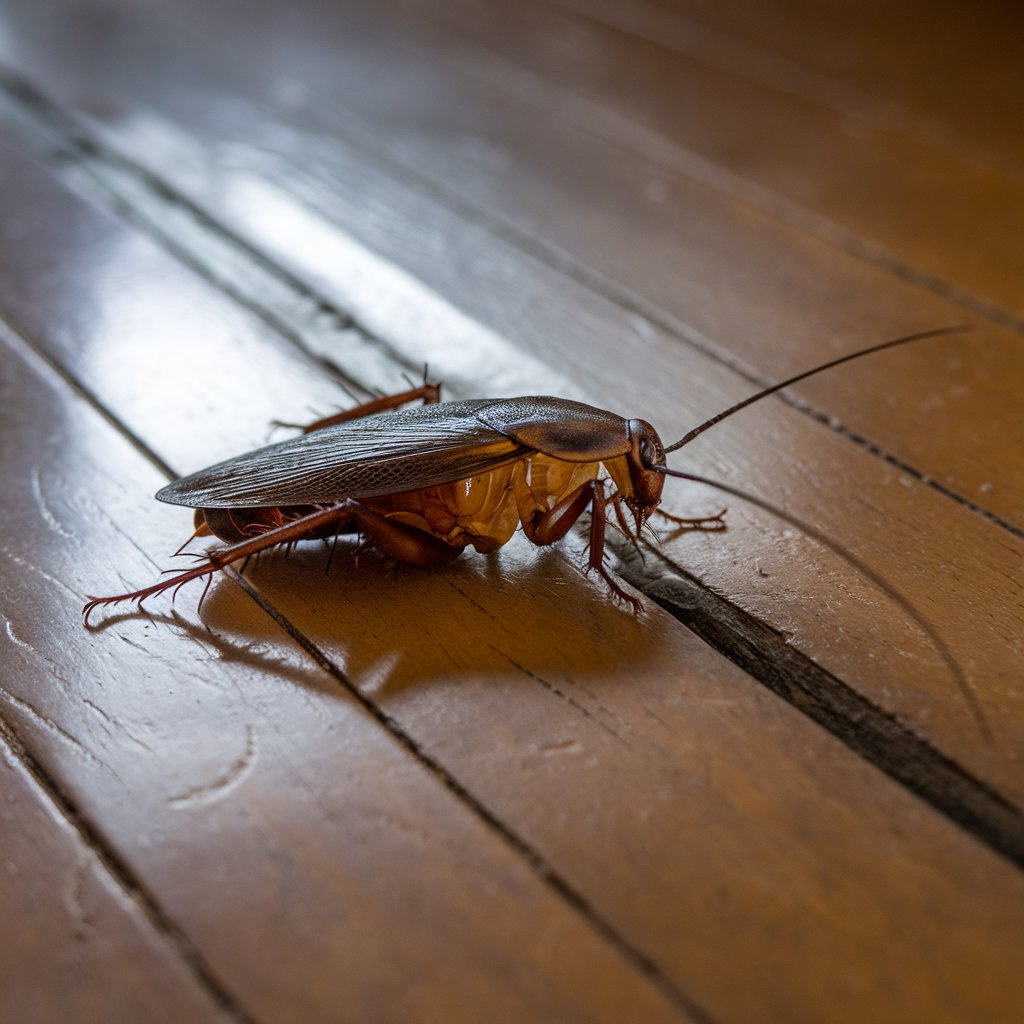
Table of Contents
- What Is a Cockroach? Scientific Overview
- Cockroach Species Found in the UAE
- Physical Characteristics & Identification
- The Cockroach Life Cycle
- Cockroach Behaviour & Why They Invade UAE Homes
- Common Entry Points in UAE Buildings
- Signs of a Cockroach Infestation
- Health Risks Associated with Cockroaches
- Why the UAE Climate Makes Cockroach Control Critical
- DIY Prevention & Sanitation Strategies
- Professional Cockroach Treatment Methods
- How to Choose a Pest Control Company in the UAE
- Frequently Asked Questions
- Conclusion
1. What Is a Cockroach? Scientific Overview
A cockroach is an insect belonging to the order Blattodea, a group that also includes termites. With a fossil record stretching back more than 300 million years — well before the age of dinosaurs — cockroaches represent one of the oldest and most evolutionarily successful insect lineages on the planet. Their longevity is no accident; it reflects an extraordinary capacity to adapt to changing environments, survive food scarcity, and develop resistance to pest-control interventions.
The scientific classification of the cockroach is as follows:
Kingdom: Animalia Phylum: Arthropoda Class: Insecta Order: Blattodea Common Name: Cockroach (Blattaria)
Of the more than 4,500 known cockroach species globally, only a small number have adapted to living in close association with humans — these are known as peridomestic or synanthropic species. It is these few species that cause almost all of the cockroach pest problems encountered in homes and businesses across the UAE.
One key biological trait that makes cockroaches such formidable pests is their thigmotaxis — a strong preference for remaining in contact with surfaces on multiple sides of their body simultaneously. This is why cockroaches are found wedged into tight cracks, behind electrical sockets, inside appliance motors, and deep within wall cavities. These harborage spots protect them from both predators and pest-control treatments, and provide the warm, humid microclimate they need to breed successfully.
Cockroaches are far from the only pest that exploits UAE building structures in this way. If you are dealing with multiple pest types simultaneously, our Residential Pest Control service covers a comprehensive range of crawling and flying insects under a single programme.
2. Cockroach Species Found in the UAE
Identifying the species present in your property is the critical first step in any cockroach management programme. Different species prefer different harborage sites, have different activity patterns, and respond differently to treatment methods.
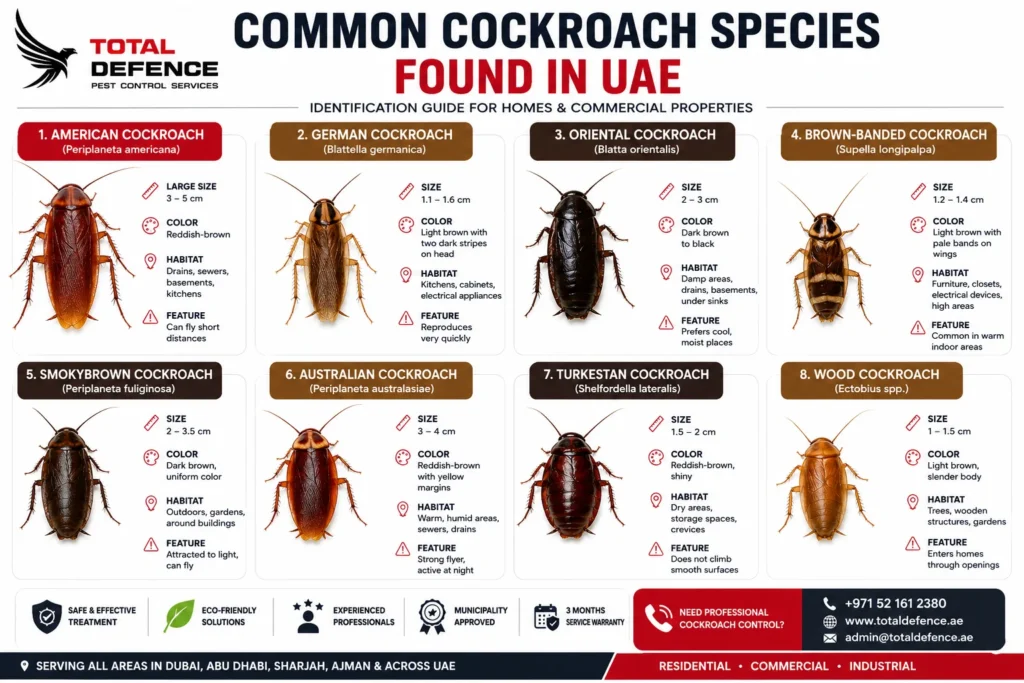
Here is a detailed breakdown of the four species most commonly encountered across Dubai, Sharjah, Ajman, and the wider UAE:
German Cockroach (Blattella germanica) Size: 1.2–1.6 cm Colour: Light brown with two dark stripes behind the head Preferred Habitat: Kitchens, bathrooms, restaurants, hotels Infestation Risk: Very High
American Cockroach (Periplaneta americana) Size: 3.5–5.3 cm Colour: Reddish-brown with yellow figure-8 pattern behind head Preferred Habitat: Sewers, drains, basements, laundry rooms Infestation Risk: High
Oriental Cockroach (Blatta orientalis) Size: 2–2.5 cm Colour: Dark brown to black, shiny appearance Preferred Habitat: Drainage systems, damp utility areas Infestation Risk: Moderate
Brown-Banded Cockroach (Supella longipalpa) Size: 1–1.4 cm Colour: Brown with pale bands across the abdomen Preferred Habitat: Bedrooms, living areas, electronics, ceiling voids Infestation Risk: Moderate to High
German Cockroach — The Primary UAE Threat
The German cockroach deserves special attention because it is, by far, the most economically significant pest cockroach in the UAE and globally. Despite its name, it almost certainly originated in South Asia and has spread worldwide through international trade and travel. In the UAE’s cosmopolitan urban environment, this species thrives due to the abundance of high-temperature, food-rich indoor spaces.
What makes the German cockroach particularly challenging is its explosive reproductive rate. A single gravid female carries an egg capsule containing 30–48 eggs, which hatch within three weeks. Under optimal UAE conditions — warm temperatures, accessible food and water — a new generation can reach reproductive maturity in as little as 36 days. The mathematical implication is stark: a single pair of German cockroaches can theoretically produce tens of thousands of descendants in a single year.
German cockroaches have also demonstrated a remarkable ability to develop resistance to many commonly used insecticides when the same active ingredient is applied repeatedly without rotation — one of several reasons why professional pest management protocols are far more effective than repeated use of supermarket sprays. Our Commercial Pest Control programmes are specifically designed around active ingredient rotation and resistance management for exactly this reason.
American Cockroach — The Large Sewer Cockroach
The American cockroach is the species most likely to be seen running across a floor in the UAE, given its impressive size. It is particularly associated with the drainage and sewage infrastructure that underlies UAE cities. Residents in older buildings or those near construction sites — where ground disturbance can displace large populations — frequently encounter this species entering their properties through floor drains, sink pipes, and air-conditioning condensate drain lines.
American cockroaches entering through drainage systems are closely linked to the standard of building sanitation infrastructure. Our Building Cleaning Service addresses communal sanitation at a building level, which is often as important as apartment-level treatment in controlling this species in multi-occupancy buildings.
Brown-Banded Cockroach — The Overlooked Threat
Unlike most cockroach species that prefer moist kitchens and bathrooms, the Brown-Banded cockroach has lower moisture requirements and will infest dry areas throughout a property — including bedrooms, wardrobes, behind picture frames, inside electronic equipment, and within false ceilings. This dispersed harborage behaviour makes it one of the most difficult species to treat comprehensively, as populations spread far beyond the kitchen where most DIY treatments are applied.
If you are seeing cockroaches in rooms other than the kitchen, this species is a strong suspect and requires the kind of whole-property inspection and treatment approach provided through our Residential Pest Control service.
3. Physical Characteristics & Identification
Being able to identify a cockroach correctly — and to distinguish species — helps enormously in determining the right treatment approach. All cockroach species share several defining physical features:
Body shape: Flattened oval profile that allows passage through gaps as thin as 1.6 mm for German cockroaches.
Antennae: Long, filiform (thread-like) antennae, often as long as or longer than the body.
Legs: Six legs covered in spines, equipped with adhesive pads enabling movement across vertical surfaces and even ceilings.
Wings: Most species possess wings, though not all fly regularly. American cockroaches are capable fliers, especially in warm weather; German cockroaches rarely fly despite having wings.
Cerci: A pair of sensory appendages at the rear of the abdomen, highly sensitive to air movement — enabling cockroaches to detect approaching threats at remarkable speed.
Colour range: Light tan (German), reddish-brown (American), near-black (Oriental), or banded brown (Brown-Banded).
Identification Tip: The most reliable way to distinguish a German cockroach from other small species is the two parallel dark stripes running from the head down the pronotum — the shield-like plate behind the head. No other common UAE species shares this marking. For large reddish-brown cockroaches, check for the distinctive yellowish figure-8 marking behind the head, which confirms the American cockroach.
Not sure which species you are dealing with? Our technicians carry out a full species identification as part of every free pest inspection — no charge and no obligation.
4. The Cockroach Life Cycle
Cockroaches undergo incomplete metamorphosis (hemimetabolism), passing through three distinct life stages — egg, nymph, and adult — without a pupal stage. Understanding this cycle is essential for effective pest management, because treatments must be timed and selected to target multiple life stages simultaneously.
Stage 1 — Egg Stage (Ootheca)
Female cockroaches produce distinctive egg cases called oothecae — hardened, purse-shaped capsules containing multiple fertilised eggs arranged in two rows. The number of eggs per ootheca varies by species: German cockroach oothecae hold 30–48 eggs; American cockroach cases hold 14–16 eggs.
Females carry the ootheca attached to their abdomen until shortly before hatching, or glue it to a protected surface in a harborage area. The ootheca’s tough protein shell protects the eggs from dehydration, many insecticides, and physical damage — making egg elimination one of the most challenging aspects of cockroach control. Hatching typically occurs within 28 to 38 days, depending on temperature and humidity.
Stage 2 — Nymph Stage
Newly hatched cockroaches, called nymphs, emerge from the ootheca in a group. They resemble miniature adults but are smaller, wingless, and often a different colour — German cockroach nymphs are nearly black with a pale mid-dorsal stripe. Nymphs are fully mobile and begin feeding immediately.
They undergo a series of moults (ecdysis) — typically 6–7 for German cockroaches and 13 for American cockroaches — shedding their exoskeleton at each moult to allow growth. The shed exoskeletons (cast skins) are one of the key signs of infestation that our pest inspectors look for during every free property inspection.
Stage 3 — Adult Stage
After the final moult, the cockroach emerges as a sexually mature adult with fully developed wings (in most species). Adult cockroaches begin mating within days. Female German cockroaches can produce a new ootheca approximately every 3–4 weeks throughout their adult life, which spans 20–30 weeks. American cockroach females live considerably longer — up to 2 years — and produce oothecae roughly monthly.
Adult cockroaches are nocturnal, spending daylight hours hidden in harborage sites and emerging at night to forage for food and water. Seeing cockroaches during the day is a strong indicator that harborage sites are overcrowded — a sign of a large, established infestation that requires immediate professional attention. Contact our pest control team immediately if you are experiencing daytime cockroach sightings.
Important Note: Many insecticide products are effective only against nymphs and adults, but not against eggs sealed within the ootheca. This is why a single treatment rarely eliminates an infestation — hatching eggs produce a new generation 3–4 weeks later. The professional programmes delivered by Total Defence always schedule follow-up treatments to catch this next emerging generation and use insect growth regulators that prevent nymphs from reaching reproductive maturity.
5. Cockroach Behaviour & Why They Invade UAE Homes
Cockroaches are opportunistic omnivores. They will consume almost any organic material — food scraps, grease residue, cardboard, book bindings, soap, hair, dead skin cells, and even each other. This dietary flexibility, combined with their ability to survive weeks without food and days without water, makes them extraordinarily resilient in challenging conditions.
Aggregation Pheromones
Cockroaches produce chemical signals called aggregation pheromones, present in their faeces, that attract other cockroaches to the same harborage site. This is why cockroach populations tend to concentrate in specific hot spots rather than distributing evenly throughout a property. It also explains why surfaces near harborage sites develop a characteristic dark, greasy staining from accumulated faecal material and body secretions. These chemical cues are so powerful that even clean, recently vacated harborage sites can attract new cockroach populations months later — which is one reason why our Disinfection and Sterilization service is often recommended alongside pest control treatment to neutralise residual attractant signals.
Nocturnal Activity
Cockroaches are strongly negatively phototactic — they avoid light and are most active during the hours of darkness. Foraging typically begins approximately two hours after lights go out and peaks in the middle of the night. This nocturnal pattern means that the visible portion of an infestation — what you see when you enter a dark kitchen and switch on the light — represents only a fraction of the total population.
Why UAE Properties Are Particularly Attractive
Environmental factors that make UAE properties ideal for cockroaches include:
- Year-round ambient temperatures of 25–45°C, well within the cockroach optimal range of 25–33°C
- Air-conditioned interiors providing stable warm temperatures even in cooler months
- High outdoor humidity during summer accelerating cockroach activity and reproduction
- Extensive underground drainage networks providing harborage for large-body species
Building and lifestyle factors include:
- Dense residential buildings with shared plumbing walls allowing cockroaches to migrate between units
- Active food delivery culture creating food residue in communal areas and lift lobbies
- Food retail and hospitality sector providing ideal commercial harborage environments — our Commercial Pest Control team works with hotels, restaurants, and food processing facilities across the UAE
- Construction activity frequently disturbing established outdoor populations and driving them indoors
6. Common Entry Points in UAE Buildings
Cockroaches do not need large openings to enter a structure. The German cockroach can pass through a gap of less than 2 mm — roughly the thickness of a coin. Understanding the primary entry routes in UAE building types helps focus both prevention and treatment efforts.
Floor and sink drain pipes: The most common entry point for American cockroaches migrating from the municipal sewage system. Drain traps that dry out during long periods without use offer a direct route from the sewer into the property. Regular drain maintenance and our Tank Cleaning Service help reduce the population density in the drainage infrastructure feeding your building.
Under-door gaps: Particularly common in older buildings or properties with worn door seals. Even a gap of 4–5 mm is sufficient for most cockroach species.
Utility penetrations: Plumbing pipes, electrical conduits, and air-conditioning service pipes passing through walls or floors often have unsealed gaps around them.
Window frames and air-conditioning units: Particularly window-type air-conditioning units, which can provide direct entry from outdoors.
Delivery packaging and second-hand goods: German cockroaches are frequently transported into previously clean premises via grocery deliveries, cardboard boxes, and second-hand appliances. This is one of the most common introduction routes in apartments and restaurants.
Shared walls in apartment buildings: Cockroaches migrate between units through gaps in shared plumbing walls, cable conduits, and ceiling voids — a significant challenge in multi-occupancy buildings. Building-wide treatment through our Building Cleaning Service and coordinated pest management programmes addresses this systematically.
Refuse areas and bin rooms: The ground-floor waste storage areas found in most UAE apartment complexes are often heavily infested and serve as a reservoir population that continuously re-seeds upper floors. Addressing bin room sanitation is an integral part of any building-level pest management programme.
7. Signs of a Cockroach Infestation
Cockroach infestations are frequently well-established by the time the property owner becomes aware of them, because of the insects’ nocturnal, secretive behaviour. Knowing the subtle early warning signs enables much earlier — and therefore less costly — intervention.
Droppings
Cockroach droppings are one of the most reliable infestation indicators. German cockroach faeces resemble small dark specks, similar in appearance to ground black pepper or coffee grounds, typically found along the edges of shelves, inside cabinet hinges, behind appliances, and within electrical fitting covers. American cockroach droppings are larger — cylindrical pellets approximately 2 mm long with ridged sides. The quantity of droppings in a harborage area gives a useful indication of population size and the duration of infestation.
Egg Cases (Oothecae)
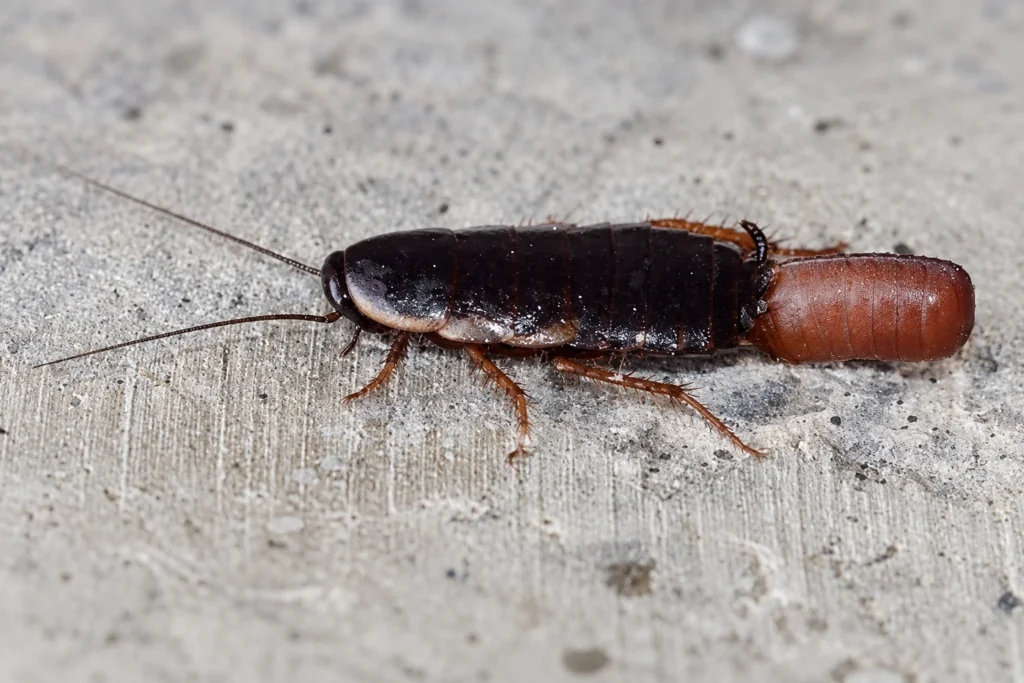
Empty or active oothecae may be found glued to surfaces in sheltered, dark locations — typically along the inside of cabinet hinges, behind refrigerator motors, under kitchen appliances, and within wall voids. German cockroach oothecae are tan-coloured and approximately 8 mm long. American cockroach oothecae are dark brown, rounded, and about 8–9 mm long. Finding multiple oothecae in a single location confirms the area is an active harborage site.
Musty Odour
A well-established cockroach infestation produces a characteristic, persistent musty or oily odour caused by aggregation pheromones, faecal deposits, and secretions from the insects’ cuticle. This smell is often first noticed in kitchen cabinets, under sinks, or in utility areas. It can be strong enough to taint food stored in the area, and in severe commercial infestations may be detectable throughout entire premises. Following professional cockroach elimination, our Disinfection and Sterilization service can neutralise residual odours and allergen deposits.
Cast (Shed) Skins
As nymphs grow, they shed their exoskeleton multiple times. These pale, papery cast skins are found in and around harborage sites. Finding multiple sizes of cast skin confirms that a population is actively breeding on-site rather than simply passing through.
Smear Marks
Where cockroach activity is high and moisture is present, cockroaches leave irregular brown smear marks along surfaces they travel repeatedly — particularly along the junction of walls and floors, and around drain openings.
Daytime Sightings
Because cockroaches are strongly nocturnal, spotting live cockroaches during daylight hours is a particularly significant warning sign. It typically indicates that the existing harborage sites are overcrowded, forcing individuals to seek food or refuge at unusual times. A daytime sighting should be treated as evidence of a large, active infestation requiring immediate professional assessment. Contact Total Defence for same-day inspection availability.
Quick Self-Inspection Tip: Switch off your kitchen lights, wait ten minutes, then switch on a bright torch and check: behind the refrigerator motor, inside the hinge channels of cabinet doors, beneath the hob grease tray, under the sink around the drain pipe, and inside the back panels of the oven. These are the five highest-probability harborage locations in any UAE kitchen. If you find activity in any of these locations, book a free professional inspection before the population grows further.
8. Health Risks Associated with Cockroaches
Cockroaches are not merely unpleasant. They represent a documented public health concern with a broad range of associated health effects, particularly relevant in the UAE’s food-service-intensive economy and densely populated urban centres.
Bacterial Contamination
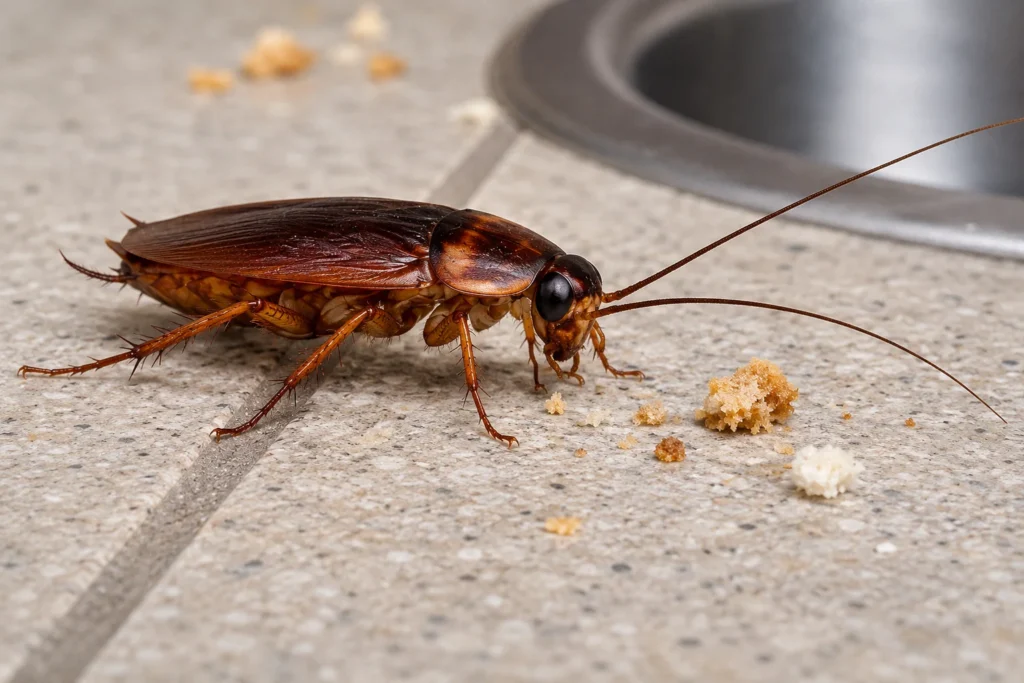
Cockroaches carry pathogens on their legs, bodies, and within their digestive tract. They are known vectors for Salmonella spp., Escherichia coli, Klebsiella pneumoniae, Staphylococcus aureus, and Pseudomonas aeruginosa, among others. These pathogens are deposited on food preparation surfaces, utensils, crockery, and food items as the cockroach forages. Following cockroach elimination, thorough surface decontamination is strongly recommended — our Disinfection and Sterilization service uses Dubai Municipality-approved disinfectants to sanitise all affected surfaces.
Food Safety Compliance in the UAE
In the UAE’s strictly regulated food service sector — governed by Dubai Municipality, Sharjah Municipality, and other authorities — cockroach infestation in a food-handling premises constitutes a critical food safety violation. Single cockroach sightings during routine municipality inspections can result in immediate closure orders, significant financial penalties, and lasting reputational damage.
For restaurants, hotels, catering companies, and food retail outlets, robust and documented pest management is not optional — it is a legal and commercial necessity. Our Commercial Pest Control service provides the written service records, treatment documentation, and municipality-compliant protocols that food businesses need to demonstrate compliance during inspections. We work with hotels, restaurants, food processing facilities, schools, hospitals, and warehouses across Dubai, Sharjah, and Ajman.
Allergenic Effects
Cockroach allergens — proteins found in their saliva, faeces, cast skins, and body fragments — are among the most significant indoor allergen sources globally. Cockroach allergen sensitisation is a major contributor to asthma in urban populations, particularly in children. Research consistently demonstrates that cockroach allergen exposure in infancy is associated with increased asthma risk, and that allergen levels in cockroach-infested properties remain elevated long after the insects are eliminated, as deposited particles break down into fine airborne dust.
In the UAE’s climate, where residents spend significant time indoors with air-conditioning recirculating internal air, allergen exposure in infested properties can be substantial. Post-treatment Disinfection and Sterilization helps reduce the allergen burden in previously infested spaces, particularly important in homes with asthmatic or allergic family members.
Gastroenteritis and Other Illnesses
The mechanical transmission of pathogens from sewage environments — where American cockroaches are particularly active — to food-contact surfaces represents a clear route for foodborne illness. Cases of salmonellosis, gastroenteritis, and urinary tract infections have been epidemiologically associated with cockroach infestation in residential and food service settings.
Particularly High-Risk Environments: Food processing facilities, restaurants and hotels, healthcare facilities (hospitals and clinics), schools and nurseries, and residential buildings with vulnerable occupants — elderly, immunocompromised, or asthmatic residents — all carry significantly elevated risk from cockroach infestation. These environments require proactive, scheduled pest management programmes. Explore our dedicated Commercial Pest Control solutions tailored specifically to high-risk facility types.
9. Why the UAE Climate Makes Cockroach Control Critical
The UAE’s climate creates conditions that are uniquely favourable to cockroach activity and reproduction compared to most other parts of the world — a factor frequently underestimated by expatriate residents arriving from cooler climates where cockroach infestations are less common.
Average summer temperatures in Dubai and other UAE cities regularly exceed 40°C outdoors, while indoor temperatures are maintained at 20–24°C by near-universal air-conditioning. This creates ideal harborage conditions: warm indoor environments with stable temperatures year-round, rather than the seasonal cold that naturally suppresses cockroach activity in temperate climates.
The UAE summer also brings high ambient humidity, particularly from June through September, which accelerates cockroach reproduction and shortens the interval between generations. Cockroach development rates approximately double with each 10°C increase in temperature above 20°C — meaning the warm UAE environment may compress the German cockroach generation time from the 90–100 days seen in cooler European climates to as little as 36–45 days.
The construction boom that has characterised UAE urban development for decades also plays a role: large-scale excavation and infrastructure works regularly disturb established cockroach populations in underground drainage systems, driving them into surrounding properties. If your building has recently undergone construction in adjacent areas, a preventive pest inspection is a sensible precaution before any infestation becomes established.
Finally, the UAE’s position as a major international logistics and hospitality hub means that cockroaches are continuously re-introduced via imported goods, food deliveries, and the constant movement of people and materials — making a “treat once and forget” approach inadequate for most commercial properties. Our Commercial Pest Control programmes are structured as ongoing managed services rather than one-off treatments for exactly this reason.
10. DIY Prevention & Sanitation Strategies
While professional treatment is essential for eliminating an established infestation, effective sanitation and exclusion measures are the foundation of any lasting cockroach management programme. These measures reduce the environmental conditions that cockroaches require to survive and breed, and help prevent re-infestation after professional treatment.
Food Storage and Kitchen Hygiene
- Store all dry goods — flour, rice, cereals, pulses, spices — in sealed, airtight containers rather than in original paper or cardboard packaging, which cockroaches can penetrate and eat
- Clean cooking surfaces, hobs, and splashbacks after every use, removing all grease and food residue
- Remove food residue from inside ovens and under hob drip trays weekly
- Never leave unwashed dishes or food residue in the sink overnight
- Wipe down the back of the refrigerator, the motor area, and the drip tray at the base — these are prime German cockroach harborage sites
- Store pet food in sealed containers and remove food bowls between feeding times
Waste Management
- Use pedal-operated bins with close-fitting lids in the kitchen
- Empty kitchen waste bins daily — never leave organic waste overnight
- Clean waste bins regularly with disinfectant to remove residual odours
- Flatten and remove cardboard boxes promptly after unpacking deliveries — cardboard is a preferred cockroach harborage material
Moisture and Plumbing
- Repair all dripping taps, leaking pipe joints, and condensation pooling around air-conditioning units promptly
- Ensure floor drain traps are always filled with water; pour water into rarely used drains weekly
- Run water through infrequently used sinks and showers at least weekly to maintain the water seal in the U-bend trap
- Install drain covers with fine mesh over floor drains and overflow drains
Regular professional drain and tank cleaning significantly reduces the cockroach population in the infrastructure below your building. Our Tank Cleaning Service covers water tanks, sewage tanks, and grease traps — all environments that can harbour large cockroach populations if not maintained correctly.
Structural Exclusion
- Seal all gaps around plumbing pipes and electrical conduits where they pass through walls or floors using silicone sealant or fire-rated foam
- Install door sweeps or brush strips on the base of external doors and building entrance doors
- Check and replace worn window seals and door gaskets
- Seal gaps in kitchen cabinet back panels, particularly where pipes enter the cabinet
Post-Construction Cleaning and Sealing
If your property has recently undergone renovation or construction work, the disruption to wall cavities, cable conduits, and floor penetrations can open multiple new entry routes for cockroaches. A Post-Construction Cleaning service combined with a pest prevention inspection is strongly recommended before reoccupying renovated spaces.
The Cardboard Rule: Many cockroach infestations in UAE apartments and restaurants are introduced via cardboard grocery boxes, food delivery packaging, and supplier cartons. German cockroaches particularly favour corrugated cardboard as a harborage medium — the fluted channels between the layers provide exactly the tight, temperature-stable shelter they need, and egg cases are frequently glued inside. Remove and dispose of all cardboard packaging immediately after unpacking, and never store stacks of cardboard boxes in a kitchen, storage room, or restaurant back-of-house area.
11. Professional Cockroach Treatment Methods
DIY treatments using supermarket sprays and foggers are rarely effective against established cockroach infestations for several important reasons: they do not reach deep harborage sites, they do not eliminate eggs, they often do not address all species present, and repeated use of the same active ingredient accelerates insecticide resistance. Professional pest management, as delivered by the Total Defence team, offers a fundamentally different approach.
Comprehensive Inspection and Species Identification
A professional programme begins with a thorough inspection to identify the species present, locate all harborage sites, assess the extent of the infestation, and identify contributing conditions. This intelligence drives a targeted treatment plan rather than a generic spray-all approach. Monitoring sticky traps are often placed at the outset to measure activity levels and track population response to treatment over time. Book your free inspection here.
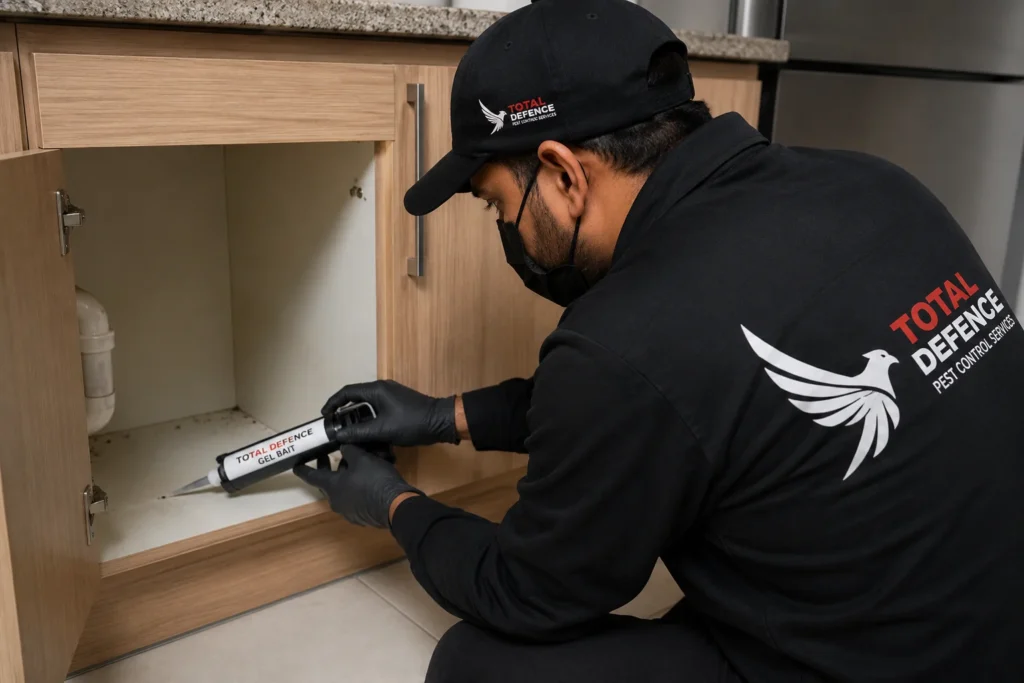
Insecticidal Gel Baits
Gel bait treatments have become the cornerstone of professional cockroach management, particularly for German cockroach infestations. The gel is applied in precise, small amounts directly inside harborage sites — inside cabinet hinges, behind appliance motor housings, inside electrical fitting covers. Cockroaches consume the bait, return to their harborage site, and die there. Critically, other cockroaches then consume the faeces and body of the dead cockroach, which still contains active insecticide — creating a secondary kill cascade that can significantly accelerate population reduction even in deep, inaccessible harborage sites. Baits have minimal impact on non-target species and leave no residue on food-contact surfaces.
Residual Insecticide Application
Water-based or micro-encapsulated residual insecticides are applied to cockroach harborage areas, runways, and entry points. The micro-encapsulation technology extends active residual life significantly and reduces odour. Only Dubai Municipality-approved active ingredients and formulations are used — a standard that all Total Defence treatments are built around.
Insect Growth Regulators (IGRs)
IGRs are compounds that interfere with cockroach development — preventing nymphs from maturing to reproductive adults, or causing reproductive failure in exposed females. They are highly effective at breaking the reproductive cycle in combination with killing agents, and are an essential component of programmes targeting resistant or large populations. IGRs have very low mammalian toxicity, making them suitable for use in sensitive environments including food service premises, hospitals, and residential properties with young children — environments we serve through both our Residential and Commercial Pest Control services.
Dust Formulations for Voids
Insecticidal dust formulations — particularly boric acid-based and inorganic dusts — are applied to enclosed voids, wall cavities, electrical conduit runs, and ceiling spaces where liquid treatments cannot reach. These dusts adhere to the cockroach’s body as it moves through the treated void and are ingested during grooming. They retain efficacy for many months in undisturbed void spaces.
Disinfection Following Treatment
After cockroach elimination, residual allergens, bacteria, faecal deposits, and pheromone signals remain on surfaces throughout the previously infested area. Our Disinfection and Sterilization service uses Dubai Municipality-approved disinfectant formulations to decontaminate all affected surfaces — a step that is particularly important in food-handling premises, healthcare facilities, and homes with young children or allergic occupants.
Follow-Up Inspections and Monitoring
A single treatment is rarely sufficient to eliminate an established infestation completely. Eggs protected within oothecae will hatch 3–4 weeks after treatment, producing a new generation of nymphs. Professional programmes always include scheduled follow-up visits, timed to treat this new generation before they reach reproductive maturity. Monitoring traps are checked and activity levels assessed at each visit to verify the programme is achieving the required reduction in cockroach numbers.
Total Defence Treatment Approach: Total Defence uses an Integrated Pest Management (IPM) approach combining species-specific identification, targeted bait gel placement, residual treatments, IGRs where required, and structured follow-up monitoring — all using Dubai Municipality-approved products and protocols. Our 3-month service warranty means that if cockroaches return within the warranty period, we re-treat at no additional charge. View our full Pest Control service range or contact us today to get started.
12. How to Choose a Pest Control Company in the UAE
The UAE pest control sector is regulated, but standards vary significantly between operators. Selecting the right pest management partner is critical — particularly for commercial properties with regulatory compliance obligations.
Non-Negotiable Requirements
- Valid municipality licence for Dubai, Sharjah, or the relevant emirate authority
- Use of municipality-approved pesticide products only
- Certified, trained technicians
- Written treatment records and service reports provided after each visit
- Clear, written service contract with defined scope and follow-up schedule
Strong Positive Indicators
- Willingness to conduct a thorough pre-treatment inspection before quoting
- Ability to identify cockroach species rather than applying generic treatments
- Gel bait and IGR components included in the treatment programme
- Service warranty with re-treatment commitment
- Verifiable positive reviews from commercial clients in your sector
Be cautious of companies offering extremely low prices that do not include follow-up visits, or those that rely solely on fogging or general surface spraying. These approaches are rarely effective against established German cockroach infestations and may simply scatter populations into adjacent areas temporarily.
Total Defence meets all of the above criteria and offers free, no-obligation site inspections for both residential and commercial properties across the UAE. Learn more about who we are and the standards we hold ourselves to, or get in touch to arrange your free assessment today.
13. Frequently Asked Questions
What cockroach species are most common in UAE homes and restaurants?
The German Cockroach is by far the most common and problematic species in UAE kitchens, restaurants, and hotels — it breeds fastest and is hardest to eliminate. The American Cockroach is frequently encountered in larger UAE buildings due to its association with drainage and sewer systems. The Oriental Cockroach prefers damp utility areas, while the Brown-Banded Cockroach can infest bedrooms and electronics — areas often overlooked in standard kitchen-focused treatments. Our Residential and Commercial Pest Control teams are trained in the identification and targeted treatment of all four species.
Why do cockroaches keep coming back even after I have treated the kitchen?
Re-infestation after a DIY treatment typically occurs for several reasons: eggs within oothecae are protected from most surface sprays and hatch 3–4 weeks later; harborage sites deep within walls, appliance motors, or ceiling voids are never reached by the treatment; entry points from drainage systems or adjacent units remain open; or cockroaches from neighbouring units or communal areas continue to migrate into the treated space. Effective elimination requires the professional, multi-stage approach delivered by Total Defence.
Are cockroaches dangerous to my family’s health?
Yes. Cockroaches are mechanical vectors for bacteria including Salmonella and E. coli, depositing these pathogens on food-contact surfaces and food items. Cockroach allergens are a major indoor allergen linked to asthma and allergic rhinitis, particularly in children. Post-treatment Disinfection and Sterilization helps reduce the allergen and bacterial burden left behind after an infestation is eliminated.
How quickly can cockroaches multiply in UAE conditions?
Extremely quickly. The German cockroach can complete a generation from egg to reproductive adult in as little as 36 days under warm UAE conditions. A single female can produce 4–8 oothecae in her lifetime, each containing up to 48 eggs. This explosive reproductive potential means that even small populations require prompt treatment — contact Total Defence as soon as you notice any signs of activity.
Do I need to vacate my property during cockroach treatment?
This depends on the treatment method used. Gel bait applications typically require no vacating of the property. Residual spray treatments generally require occupants and pets to leave treated areas for 1–2 hours while surfaces dry. Your Total Defence technician will advise on specific preparation requirements before treatment.
How do I permanently get rid of cockroaches in a Dubai apartment?
Permanent elimination requires professional treatment of all harborage sites, follow-up treatment 3–4 weeks later, sealing of all structural entry points, and sustained sanitation practices. In apartment buildings, liaising with building management for a coordinated approach through our Building Cleaning Service and building-wide pest management significantly improves long-term outcomes.
What is the cost of professional cockroach control in Dubai?
Treatment costs vary depending on property size, infestation severity, species composition, and whether the programme is for residential or commercial use. Total Defence provides free site inspections and customised quotations — contact us here for a no-obligation assessment.
Is cockroach gel bait safe to use in a kitchen where food is prepared?
Yes. Professional gel baits are applied in small amounts inside harborage sites — never on food-contact surfaces. Municipality-approved gel bait products used by Total Defence are assessed for food-service safety and are part of our standard Commercial Pest Control protocols for restaurants and food businesses.
14. Conclusion
Cockroaches are among the most adaptable, reproductively prolific, and health-relevant pest species encountered in the UAE. Their ability to exploit the warm, food-rich environments found in UAE residential and commercial buildings — and to develop resistance to commonly available insecticide products — means that effective management demands a level of biological understanding, targeted treatment strategy, and programme persistence that goes well beyond the reach of household insecticide products.
The key takeaways from this guide:
- Identifying the cockroach species present is the essential first step — different species require different control approaches
- The life cycle, and specifically the egg-protected nature of the ootheca, means that single treatments rarely achieve lasting elimination
- The UAE’s year-round warm temperatures and dense urban infrastructure make cockroach populations particularly dynamic and fast-reproducing
- Cockroaches pose genuine, documented health risks — not merely cosmetic ones — particularly for vulnerable populations and food-service businesses
- Sanitation and exclusion are foundational to any sustainable control programme, but cannot on their own eliminate an established infestation
- Professional treatment using a combination of gel baits, residual products, and insect growth regulators, delivered in a structured programme with follow-up visits, is the most reliable path to lasting cockroach elimination
If you have identified signs of cockroach activity in your property — or if you want to put a proactive programme in place before an infestation develops — the team at Total Defence is available to conduct a free, no-obligation inspection and provide a tailored treatment recommendation for your specific situation.
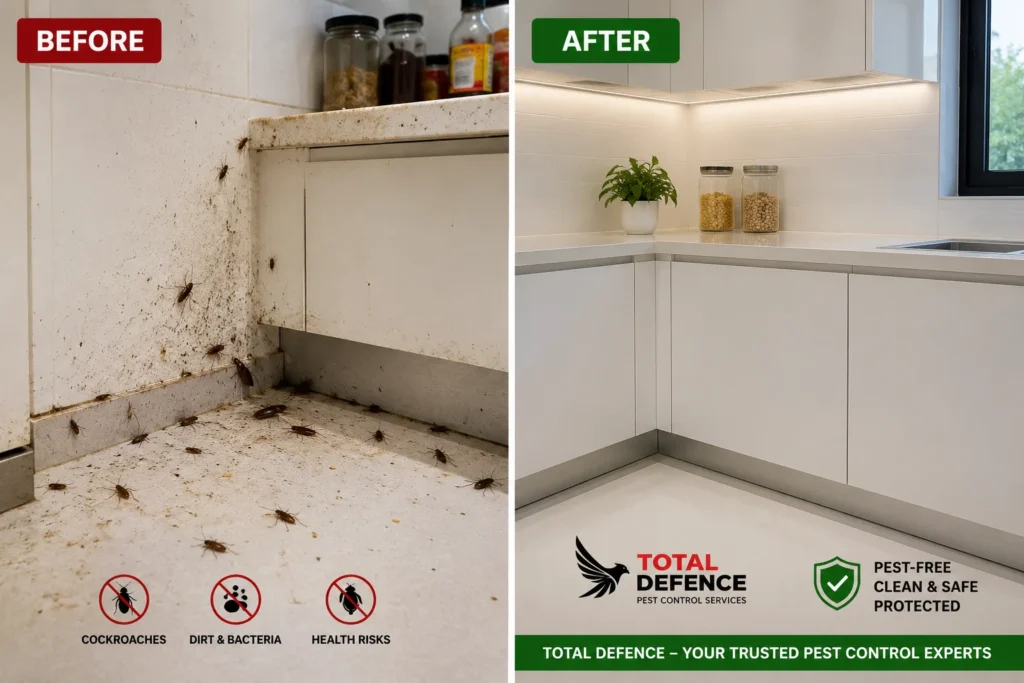
Ready to Eliminate Cockroaches from Your Property?
Total Defence provides professional, municipality-approved cockroach control services across Dubai, Sharjah, and Ajman — for residential, commercial, and industrial properties.
✔ Free Inspection ✔ Municipality-Approved Products ✔ Certified Technicians ✔ 3-Month Service Warranty ✔ Residential & Commercial Coverage
Book a Free Inspection → View All Pest Control Services → Residential Pest Control → Commercial Pest Control → Disinfection & Sterilization →
Call: +971 50 719 4505 Email: admin@totaldefence.ae