
If you woke up with bites this morning and you're in Dubai — read this first. You are not alone, you are not dirty, and this is absolutely solvable. This guide covers everything: how to know for sure it's bed bugs, what treatments actually work in Dubai's climate, exactly what it costs, whether your landlord pays, and how to make sure they never come back.
Why bed bugs are a growing problem in Dubai in 2026
If you are reading this from a Dubai apartment at 2am, itching and confused — welcome to a problem that is affecting more UAE residents in 2026 than ever before.
Bed bug cases across Dubai have been rising steadily over the past three years. There are three main reasons for this.
First, Dubai is one of the highest-traffic travel hubs in the world. With tens of millions of passengers passing through Dubai International Airport annually, bed bugs travel as stowaways in luggage, clothing, and personal items. They do not care whether you flew business class or economy. They hitch a ride and come home with you.
Second, Dubai’s residential market sees enormous tenant turnover. Apartments in areas like JVC, Dubai Marina, Discovery Gardens, Deira, and Bur Dubai change hands frequently. Bed bugs left behind by a previous tenant can survive in mattress seams, skirting boards, and furniture for months — waiting for the next occupant.
Third, the UAE climate works against us. Bed bugs thrive in temperatures between 21°C and 32°C. In Dubai, that is year-round. Unlike in colder countries where winter interrupts the life cycle, bed bugs in Dubai breed continuously throughout the year.
The result: an infestation that starts with three or four bugs in a mattress seam can become hundreds within six weeks if left untreated.
This guide gives you everything you need to handle this properly — from confirming it is actually bed bugs, to understanding what professional treatment in Dubai involves, to making sure they do not come back.
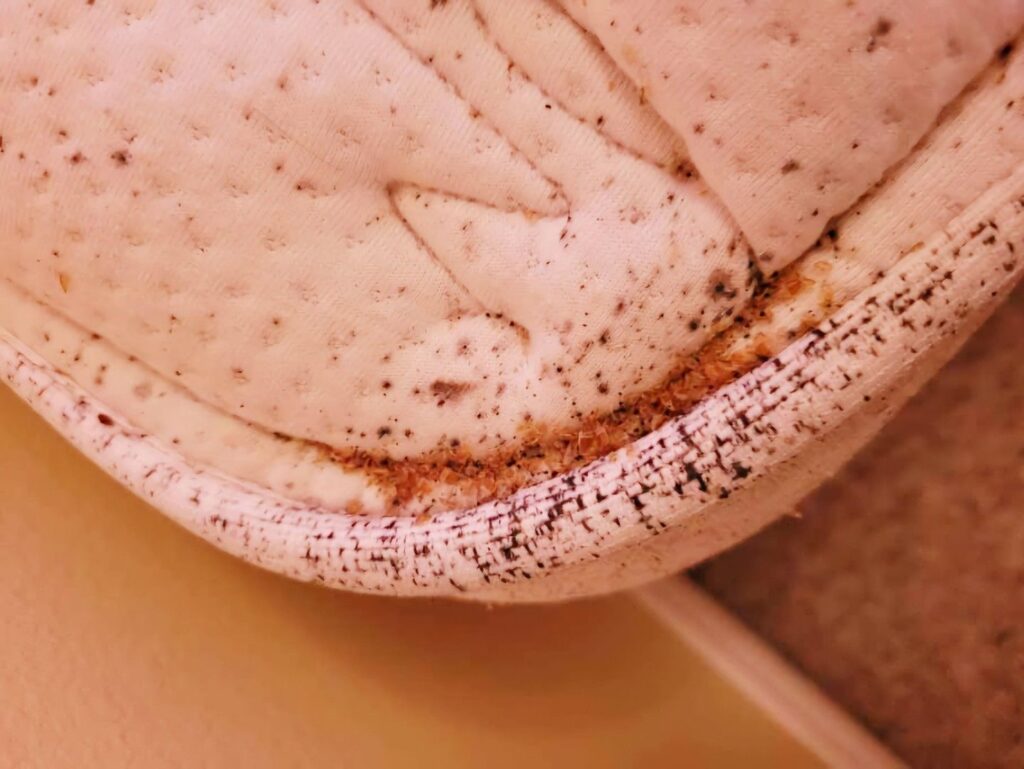
What do bed bugs actually look like? (And where are they hiding right now?)
Before anything else, you need to confirm what you are dealing with. Misidentification is common — people confuse bed bugs with carpet beetles, spider mites, and even flax seeds.
Here is exactly what a bed bug looks like:
- Size: Adult bed bugs are roughly 4–5mm long — about the size of an apple seed
- Shape: Flat and oval when unfed, swollen and reddish-brown after feeding
- Colour: Pale yellowish-white when young (nymphs), deepening to reddish-brown as adults
- Movement: They crawl — they cannot fly or jump
- Smell: A heavy infestation produces a distinctive sweet, musty odour, sometimes described as overripe raspberries
What you are far more likely to see than the bugs themselves are the signs they leave behind:
- Dark reddish-brown spots on mattress seams and fabric — these are their droppings (digested blood)
- Tiny blood smears on your sheets from accidentally crushing a feeding bug in your sleep
- Shed skins (exoskeletons) — cream-coloured, paper-thin husks left behind as nymphs grow
- Eggs and eggshells — tiny (1mm), pearl-white, often found in clusters in fabric folds
The key thing to understand: bed bugs are almost never seen in the open during the day. They are nocturnal feeders that come out exclusively when a warm body is present and still — which means when you are sleeping.
I woke up with red itchy bites all over my arms — is it bed bugs?
This is the most-searched question about bed bugs in Dubai, and it deserves a straight answer.
Waking up with new bites that were not there when you went to bed is one of the strongest indicators of bed bugs — but it is not confirmation on its own. Here is how to be sure.
Check your body first. Bed bug bites typically appear in clusters or a line — often called “breakfast, lunch, and dinner” — because a single bug feeds, moves slightly, and feeds again. Common areas: arms, shoulders, neck, ankles, and the backs of legs. Any exposed skin while you sleep is a target.
Check your sheets immediately. Pull the sheets back and look at the mattress surface — especially along the seams. Use your phone torch. Look for tiny dark spots (droppings), small blood smears, or shed skins.
Check the mattress corners and tags. Bed bugs love the seams, piping, and label areas of mattresses. Pull back the corner of the mattress and inspect with a torch.
Check behind the headboard. If your bed is against a wall with a headboard, pull it away and check the wall side. This is one of the most common hiding spots in Dubai apartments.
Take photos of everything — bites, spots, anything suspicious. This dramatically speeds up the inspection when a professional technician arrives.
If you find any of the signs described above, do not move your mattress out or buy a new one yet — read sections 12–18 first. Moving a mattress without treatment often spreads the infestation to other rooms.
For an immediate free inspection across Dubai, contact Total Defence — we can often be there the same day or next morning.
What do bed bug bites look like? How do I tell the difference from mosquito bites?
This is genuinely confusing — both produce red, itchy welts on the skin. Here is how to tell them apart.
Bed bug bites:
- Appear in clusters, lines, or zigzag patterns (typically 3 or more in a group)
- Are found on skin that was exposed while sleeping
- May not appear until 24–48 hours after the actual bite in some people
- Tend to be slightly larger than mosquito bites, with a harder, more raised centre
- Itch intensely and can persist for several days
- Do not have a central puncture hole visible to the naked eye
Mosquito bites:
- Usually appear as isolated, random bites — not in neat lines or clusters
- Appear immediately after the bite — you often notice them while they are happening
- Are softer, rounder welts that tend to fade faster (within 24–48 hours)
- Can occur anywhere on the body, including under clothing
- Are more common near windows, drains, and outdoor areas
The most reliable test: If you are waking up with new bites every morning, in lines or clusters, only on exposed skin — and you cannot recall being near mosquitoes — it is almost certainly bed bugs. A single mosquito in a room causes random bites that stop once the mosquito is removed. Bed bugs cause fresh bites every single night.
I saw tiny blood stains on my white bed sheet — is that bed bugs?
Yes — this is one of the clearest signs of an active bed bug infestation.
Those small reddish-brown smears appear when you roll over in your sleep and crush a bed bug that has just finished feeding. The blood inside the bug transfers to the sheet.
Do not wash the sheets yet if you are trying to confirm the infestation. Show them to the pest control technician during inspection — it helps confirm activity and estimate severity.
Along with blood smears, look for:
- Dark brown or black spots smaller than a pinhead — this is bed bug excrement (digested blood), often found in clusters along mattress seams or where the bed meets the wall
- Yellow or cream-coloured shells — these are moulted skins from growing nymphs
- A sweet, slightly rusty smell — strong infestations produce a noticeable odour
If you are finding all three of these signs together, the infestation is established and requires professional treatment immediately. Contact our residential pest control team for a same-day assessment.
Found small brown bugs in my mattress — what are they?
If you have found small brown bugs in or around your mattress, here is how to identify them:
Bed bugs — flat, oval, apple-seed sized, reddish-brown. Cannot fly. Move slowly. Found in mattress seams, behind headboards, in furniture joints.
Carpet beetles — rounder, smaller, often with a mottled pattern. Their larvae (not adults) are the ones that damage fabric and can be mistaken for bed bug nymphs. They do not bite.
Book lice (psocids) — extremely tiny, almost translucent, often found in humid environments. They do not bite and are usually a humidity issue rather than a pest infestation.
Fleas — much smaller than bed bugs, jump, and are typically brought in by pets. Bites tend to be around ankles and lower legs.
Spider mites — tiny, red or brown, associated with plants. Not a bedroom pest.
If you have any doubt, capture one of the bugs in a sealed clear plastic bag or take a close-up photo and send it to a pest control company for identification before booking treatment. Total Defence offers free identification consultations — contact us here.
Where do bed bugs hide in a bedroom? Complete inspection checklist
Bed bugs are expert hiders. They squeeze into any crack or crevice within roughly 2–3 metres of where you sleep. Here is a complete inspection checklist — go through this methodically with a torch:
On the bed itself:
- Mattress seams, piping, and tufts (top and bottom)
- Box spring — especially the fabric underside and wooden frame joints
- Bed frame joints and screw holes
- Behind and under the headboard (the most overlooked spot)
- Slat connectors and any hollow legs
Around the bed:
- Behind the bedside table and inside any drawers
- Along the skirting board directly behind and beside the bed
- Inside any picture frames on the wall near the bed
- Behind electrical socket plates on the wall near the bed
- Inside or behind the curtain rails and curtain folds
Furniture:
- Inside sofa joints and cushion seams (if you sleep on the sofa)
- Any second-hand furniture bought recently
- Wardrobe joints and clothing in contact with infected areas
The floor and walls:
- Cracks in plaster, gaps in wallpaper
- Carpet edges along the skirting board near the bed
- Any gaps where pipes or cables enter the wall
If you find evidence in more than two locations, the infestation is moderate to severe and will require multiple treatment sessions. Do not delay — every week an infestation grows exponentially.
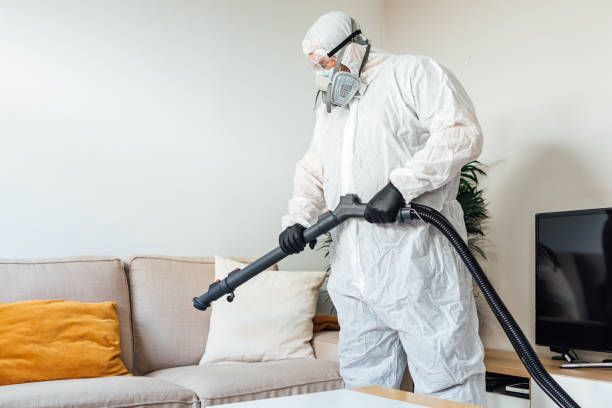
Can I get rid of bed bugs myself, or do I need a professional?
This is the question most Dubai residents ask after finding bed bugs — and the honest answer is: you almost certainly need a professional, but here is why.
DIY bed bug products available in Dubai supermarkets and hardware stores — sprays, powders, foggers — are either:
- Contact killers only — they kill what they touch but leave zero residual effect. A bed bug hiding 2mm inside a mattress seam simply waits for the spray to dry and walks out unharmed.
- Not strong enough — consumer products contain significantly lower concentrations of active ingredients than professional-grade treatments. They are regulated this way for public safety.
- Not effective against eggs — bed bug eggs have a protective coating that most consumer sprays cannot penetrate.
There is only one situation where DIY might work: a very early-stage infestation (fewer than 10 bugs, confined to one small area) caught within the first week. In that rare scenario, diatomaceous earth powder (available in Dubai garden centres) applied carefully along mattress seams and floor edges can help.
In every other scenario — which is the reality for 95% of callers — a professional treatment is not just better, it is the only thing that actually works.
Does Dettol or spray kill bed bugs in Dubai?
Dettol, Raid, and other household sprays are by far the most commonly tried DIY solutions for bed bugs in the UAE. People spray their mattresses, their sofas, their skirting boards — and then call a pest control company two weeks later wondering why the bites have not stopped.
Here is the truth:
Dettol (antiseptic liquid/spray) — No meaningful effect on bed bugs. Dettol is a disinfectant designed for bacteria and mild viruses. It does not kill insects at typical household dilutions. Spraying your mattress with Dettol will not harm bed bugs in any meaningful way.
Raid and similar aerosol insecticides — May kill bed bugs on direct contact, but have no residual effect. Bed bugs simply avoid sprayed surfaces once dry. Research has also shown that many bed bug populations have developed resistance to the pyrethroid compounds used in most consumer aerosols.
Essential oils (tea tree, lavender, eucalyptus) — Popular home remedies with no clinical evidence of effectiveness against bed bugs at household concentrations.
Rubbing alcohol (isopropyl) — Kills bed bugs on direct contact but again has no residual effect, evaporates almost immediately, and is a significant fire hazard when sprayed in quantity.
The conclusion is consistent: consumer products delay treatment, give a false sense of progress, and sometimes scatter the infestation to harder-to-reach areas. Calling a professional at the first sign is always the right decision.
Our residential pest control service uses professional-grade, Dubai Municipality-approved treatments that are proven to work — and backed by our 3-month warranty.
I put my mattress in the Dubai sun — will that kill bed bugs?
This is a uniquely UAE question — and the logic makes sense. Dubai’s summer sun is ferocious. Surely it can bake bed bugs out of a mattress?
Here is the problem.
Yes, heat kills bed bugs — but the temperature needs to reach and hold at least 48–50°C throughout the entire mattress, including the core, for a minimum of 90 minutes. A mattress placed in direct Dubai sun may reach 40–45°C on the surface, but the core of the mattress — where bed bugs and their eggs are hiding — stays significantly cooler due to the insulating properties of the foam or springs.
The result: surface bugs die, core bugs survive, and within a week you are back where you started — or worse, because you moved the mattress outside and potentially spread bugs to other areas of your home.
Professional heat treatment for bed bugs uses specialist equipment that uniformly raises the temperature of every surface in the room — including inside the mattress, behind skirting boards, inside furniture joints — to lethal temperatures and holds it there for long enough to kill all life stages including eggs. This cannot be replicated by leaving a mattress on a balcony.
I sprayed the mattress but the bed bugs came back — why?
This is one of the most common calls we receive at Total Defence. A resident sprays everything they can see, the bites stop for a few days, then start again — sometimes worse than before.
There are four main reasons this happens:
Reason 1 — Eggs survived. Consumer sprays do not penetrate or kill bed bug eggs. Even if every adult bug in your mattress died, the eggs in the seams, cracks, and furniture will hatch in 6–10 days and the cycle starts again.
Reason 2 — Hidden populations survived. You treated the mattress, but the bugs hiding behind your headboard, inside your bed frame joints, in your bedside table drawer, and behind the skirting board were untouched. They simply recolonised the mattress.
Reason 3 — Resistance. Many bed bug populations in Dubai have developed partial resistance to the active ingredients in common consumer sprays. The spray kills the most vulnerable individuals but the resistant ones survive and reproduce.
Reason 4 — You moved infested items. If you took the mattress to another room, moved cushions, or washed and moved bedding before treatment was complete, you may have spread the infestation to additional areas.
A professional treatment addresses all four of these problems simultaneously — using a combination of residual sprays, targeted gel treatments, and heat where necessary, with a follow-up session scheduled to catch any late-hatching eggs.
Heat treatment vs chemical spray — which is better for bed bugs in Dubai?
Both methods work when applied correctly by a professional. Here is the honest comparison:
Heat treatment (thermal remediation)
Heat treatment raises the temperature of an entire room to 50–55°C for a period of several hours. Every life stage of bed bug — eggs, nymphs, adults — is killed at this temperature. No chemicals are used, which is why it is increasingly preferred by families with young children or people with chemical sensitivities.
Advantages: kills eggs (which chemicals sometimes miss), no chemical residue, can treat an entire room in one session, no re-entry delay after treatment.
Disadvantages: higher cost than chemical treatment, requires significant preparation (removing heat-sensitive items), and does not provide residual protection — if new bugs enter from a neighbour’s apartment, there is no ongoing barrier.
Chemical spray treatment (residual insecticide)
Professional-grade residual sprays — applied by a licensed technician — leave an active layer on surfaces that continues killing bed bugs for several weeks after application. This ongoing residual protection is particularly valuable in Dubai apartment buildings where re-infestation from neighbouring units is a real risk.
Advantages: lower cost, ongoing residual protection, effective against all life stages with correct product selection, includes follow-up visits.
Disadvantages: requires the property to be vacated during treatment and for a short period after, uses chemical products (though DM-approved and safe when dry).
The Total Defence approach: For most Dubai apartments, we recommend a professional residual chemical treatment with a follow-up session 10–14 days later to catch any newly hatched bugs. For families with infants or severe chemical sensitivities, we offer heat treatment as an alternative. Contact us to discuss the best approach for your specific situation.
Does my landlord pay for bed bug treatment or do I?
This is one of the biggest grey areas in Dubai tenancy — and it causes enormous frustration.
Here is the legal reality under Dubai rental law:
The landlord is responsible if bed bugs were present in the property before you moved in, or if the infestation is caused by a structural defect — such as cracks between apartments allowing bugs to travel between units, or infested furniture left by the previous tenant.
The tenant is responsible if the bed bugs were brought in by the tenant (via travel, second-hand furniture, or visitors), or if the tenant ignored early signs and allowed a small problem to become a large one.
In practice, proving which situation applies is difficult. Most experienced pest control technicians can give a rough indication of infestation age based on the number of life stages present and the distribution of the population — which can help support your case with a landlord.
Our recommendations:
- Document everything in writing to your landlord via WhatsApp or email the moment you discover the problem
- Request treatment within a written deadline (5–7 days is reasonable)
- If the landlord does not respond, arrange treatment and keep all receipts
- Consult Dubai Municipality’s Rental Disputes Centre (RDC) if the landlord refuses to cooperate
For commercial properties, our commercial pest control service includes full documentation suitable for landlord dispute records.
How many sessions do I need?
This is where most people get misled by cheap quotes. One session is rarely enough for an established bed bug infestation. Here is why.
No treatment — not even professional heat treatment — kills every single bed bug egg on the first visit. Bed bug eggs are notoriously resistant to most chemical treatments, and even heat treatment cannot always guarantee complete egg kill if temperature distribution is uneven.
The standard approach used by all reputable pest control companies in Dubai:
Session 1 (Day 1): Full treatment of all affected areas — mattress, bed frame, surrounding furniture, skirting boards, behind fixtures. This eliminates all adult bugs and nymphs present and applies residual protection.
Session 2 (Day 10–14): Follow-up visit targeting any newly hatched nymphs from eggs that survived Session 1. These newly hatched bugs have not yet developed resistance and are extremely vulnerable to residual chemicals from the first treatment.
Optional Session 3 (Day 28–30): For severe infestations, or large properties with multiple rooms affected, a third session may be recommended.
When requesting a quote, always ask: “Does your price include a follow-up session?” If the answer is no, factor in that second session cost before comparing prices.
Total Defence’s bed bug treatment packages include the follow-up session and a 3-month warranty as standard — get a free quote here.
Is bed bug treatment safe for my baby and my cat?
Yes — when carried out by a Dubai Municipality-approved company using registered products. This is a reasonable concern and one you should raise openly with any company you book.
Here is what Total Defence does to protect your family during bed bug treatment:
- All DM-approved insecticides are low-toxicity when dry. The risk period is during application and the first 1–2 hours afterwards.
- All food items, bottles, baby dishes, pet bowls, and toys are covered or removed from the treatment area before we begin.
- Pets are taken out of the property during treatment and brought back after re-entry is confirmed safe.
- For babies under 6 months or pets with respiratory conditions, we recommend a minimum 4-hour re-entry period and thorough ventilation.
- Floors and surfaces that infants or pets contact directly are treated with the safest available formulations.
If heat treatment is used instead of chemical spray, there are no chemical residues whatsoever — the room simply needs to cool before re-entry.
Always inform the technician at the time of booking about infants, pregnant women, or pets with health conditions. We will adjust the treatment plan accordingly.
How long do I have to stay out of my apartment after treatment?
For chemical bed bug treatment: 2 to 4 hours minimum, with full ventilation (open all windows) when you return.
For intensive multi-room chemical treatment: 4 to 6 hours, with overnight ventilation recommended.
For heat treatment: 2 to 3 hours after the room has cooled to normal temperature — no chemical residue means re-entry is safe as soon as it is comfortable.
What to do when you return:
- Open all windows and ventilate for at least 1 hour
- Do not wash, mop, or wipe treated surfaces for 72 hours — you will remove the residual product that continues killing bugs
- You can make the bed with fresh sheets — just do not wash the mattress surface
- Vacuum the floor only after 72 hours
It is completely normal to see bed bugs crawling or dying on surfaces for 24–48 hours after treatment. This is the chemical working — bugs are being driven from hiding and crossing the treated surface. Do not panic if you see activity in the first two days. Contact us if activity continues beyond Day 5.
Do I need to throw away my mattress?
In the vast majority of cases — no.
This is one of the most common misconceptions about bed bug treatment. Many Dubai residents throw away perfectly good mattresses, spend AED 1,000–3,000 on a replacement, and then find bed bugs in the new mattress within weeks — because the real infestation was in the bed frame, headboard, and surrounding furniture, not just the mattress.
When you do NOT need to throw away the mattress:
- When a professional treatment is applied directly to the mattress
- When a bed bug proof encasement cover is fitted after treatment — this traps any surviving bugs inside and starves them while protecting the treated surface
When you might consider replacing the mattress:
- The mattress is very old, heavily infested, and the interior foam is visibly compromised
- The mattress cannot be effectively treated due to its construction
- Your technician specifically recommends it after inspection
If you do decide to dispose of a mattress, seal it completely in plastic wrap before moving it — do not carry an open infested mattress through your building’s corridors. This spreads bed bugs to lifts, corridors, and other apartments.
Can bed bugs come back after professional treatment?
Yes — they can. But understanding why helps you prevent it.
There are two distinct scenarios:
Scenario A: Treatment failure. The treatment did not work. This is rare with a reputable, licensed company — but it happens if eggs survived and the follow-up session was skipped, or if the infestation was in areas the treatment did not reach. This is why Total Defence offers a 3-month warranty — if this happens, we return for free.
Scenario B: Re-infestation from outside. The treatment worked perfectly, but new bed bugs entered the property from elsewhere — a neighbour’s apartment, a hotel stay, a visitor’s belongings, or second-hand furniture. This is not a treatment failure. It is a new infestation.
In dense Dubai apartment buildings, Scenario B is actually the more common reason for “return” — particularly in buildings with shared pipe chases, cable conduits, or gaps between unit walls where bugs can physically travel.
To protect against re-infestation after treatment:
- Fit bed bug proof encasement covers on your mattress and box spring
- Check all second-hand furniture before bringing it inside
- Inspect your luggage after hotel stays — see section 22
- Seal any visible gaps in skirting boards or around pipes
How do bed bugs spread between apartments in Dubai buildings?
This is critically important for Dubai residents because apartment living is the norm — and bed bugs do travel between units.
The main pathways:
Through shared walls and pipe chases: In many Dubai apartment buildings — particularly older ones in Deira, Bur Dubai, and Al Barsha — utility pipes and cable runs pass through shared walls with gaps around them. Bed bugs can and do crawl through these gaps.
Via lifts and corridors: When an infested mattress or piece of furniture is moved through a building without being sealed, bugs drop off in lifts and corridors and can enter any unit on any floor.
Through ventilation gaps and air conditioner pipes: Less common but possible, particularly in older buildings with shared duct systems.
Via human movement: Bed bugs can travel on clothing and bags. A visitor from an infested apartment can unknowingly carry bugs to yours.
If you know or suspect a neighbouring unit is infested, inform your building management in writing immediately. In Dubai, building management has a legal responsibility under Dubai Municipality health regulations to address shared-building pest issues.
Our residential pest control team regularly treats entire apartment floors and buildings in these situations — a more cost-effective approach than individual unit-by-unit treatment.
How to prevent bed bugs when moving into a new Dubai apartment
Before you bring a single piece of your furniture in, do this:
Step 1 — Inspect the empty apartment. Strip the bedroom carpet edge, check the skirting boards, look inside any built-in wardrobes, check around the AC unit. Look for the signs described in section 2 above.
Step 2 — Request treatment history from your landlord or agent. Ask directly: “When was the apartment last treated for pests?” A legitimate landlord will have records. No records is a red flag.
Step 3 — Book a preventive pest control treatment before moving in. This is far cheaper and less disruptive than treating an active infestation after you have moved all your belongings in.
Step 4 — Be cautious with second-hand furniture. Dubai’s Facebook Marketplace and classified sites are popular, but second-hand sofas, mattresses, and bed frames are the number one source of introduced bed bugs in UAE apartments. Inspect everything meticulously before it enters your home.
Step 5 — Fit mattress encasement covers from day one. These smooth, sealed covers eliminate the hiding places on the mattress itself and make future inspections far easier.
Our residential pest control service offers move-in inspection and preventive treatment packages specifically for new Dubai residents.
Can you get bed bugs from a hotel stay in Dubai? What to check when you come home
Yes. Even five-star hotels in Dubai have documented bed bug incidents — it is not a reflection of the hotel’s cleanliness. A single guest with infested luggage can introduce bugs to any room.
What to check before sleeping in any Dubai hotel room:
- Pull back the sheets and inspect the mattress seams nearest the pillow end
- Check behind the headboard — pull it slightly away from the wall
- Look for dark spots or shed skins on the mattress piping
- Put your luggage on the bathroom floor or in the bath — not on the bed or upholstered luggage rack
What to do when you come home:
- Leave your luggage in your car boot or on a hard floor outside the bedroom
- Immediately put all clothing from your trip into the washing machine on the highest heat setting the fabric allows
- Inspect your luggage thoroughly, including inside pockets and along zip seams
- Consider leaving luggage in a sealed bag in a hot car (Dubai’s summer heat can reach lethal temperatures inside a parked car) for 24 hours before bringing it inside
Why Total Defence is Dubai’s trusted bed bug treatment specialist
Total Defence has been protecting homes and businesses across Dubai, Sharjah, and Ajman since our founding. Here is what makes our bed bug treatment different:
Dubai Municipality approved and licensed. Every chemical we use is registered with Dubai Municipality. Every technician has passed DM training requirements. You receive an official treatment certificate after every visit.
Free inspection — no commitment. We come to you, assess the situation, and give you a clear written quote before any work begins. No call-out charge.
3-month warranty. If bed bugs return within three months of our treatment, we come back and retreat at no additional cost. Most companies in Dubai do not offer this.
Two-session standard protocol. Our bed bug treatment package includes the initial treatment and the critical follow-up session 10–14 days later. This is not an add-on — it is included in your quote.
Family-safe products. All treatments use DM-approved, low-toxicity residual products safe for homes with children and pets when used as directed. Heat treatment is available for chemical-free treatment.
Transparent pricing. No hidden charges. What we quote is what you pay.
We serve all areas of Dubai including Dubai Marina, JVC, JLT, Downtown Dubai, DIFC, Deira, Bur Dubai, Al Barsha, Mirdif, Arabian Ranches, The Springs, The Meadows, Palm Jumeirah, Business Bay, and all surrounding communities in Sharjah and Ajman.
Book your free bed bug inspection today — call or WhatsApp (+971) 52 161 2380.
Ready to be bed-bug-free? Here is your next step.
Bed bugs are distressing, disruptive, and spread fast — but they are completely solvable with the right professional treatment.
Total Defence is Dubai Municipality approved, has treated hundreds of apartments across Dubai, Sharjah, and Ajman, and backs every bed bug treatment with a 3-month warranty. We offer free inspections, honest pricing, and same-day availability for urgent cases.
Explore our full range of pest control and cleaning services:
- Residential Pest Control Dubai
- Commercial Pest Control Dubai
- All Pest Control Services
- Disinfection and Sterilisation
- Building Cleaning Services
- Contact Us for a Free Inspection
Call or WhatsApp: (+971) 52 161 2380 Email: admin@totaldefence.ae Serving: Dubai | Sharjah | Ajman