
Wood Borer Guide: Signs, Treatment & How to Get Rid of Them for Good (2026)
Tiny round holes in your furniture, a fine dust collecting below your skirting boards, floorboards that feel a little too soft underfoot — wood borers work quietly for months before the damage becomes obvious. This guide covers what wood borers are, how to spot them early, wood borer vs termite differences, DIY treatment, and how to get rid of them permanently.
What Is a Wood Borer?
Small, slow, and easy to miss — here's what a wood borer actually is before we get into how to spot and treat one.
A wood borer is a type of beetle whose larvae feed on and tunnel through wood. An adult female lays her eggs in cracks, joints, or old exit holes in timber. Once hatched, the larvae burrow deep inside and feed for months — sometimes years — before emerging as adult beetles, leaving behind a network of tunnels (called "galleries") and small round exit holes on the surface.
Because the larvae live and feed hidden inside the wood for so long, most homeowners don't notice a problem until the damage is already advanced — which is exactly why early identification matters.
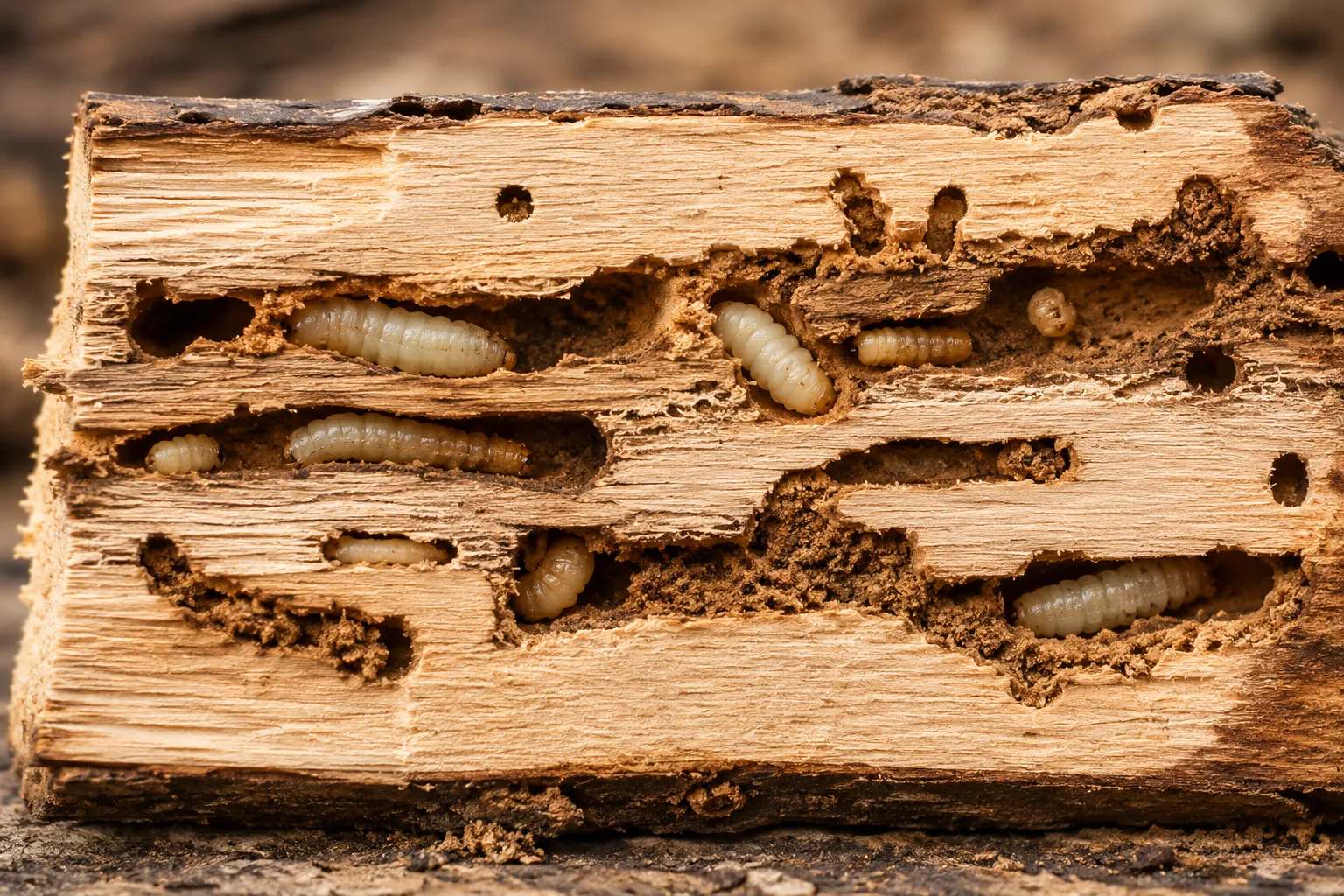
A wood borer is the larval stage of certain beetles that tunnel through and feed on wood from the inside. Unlike termites, wood-boring beetles lay their eggs directly in timber, where the larvae develop and create tunnels rather than living in large colonies and travelling to feed.
Common Wood Borer Species
Not all wood boring beetles behave the same way — knowing which one you're dealing with shapes the right treatment.
Several wood-boring beetle species commonly attack furniture, flooring, doors, and roof timbers. Each has different preferences for wood type and location:
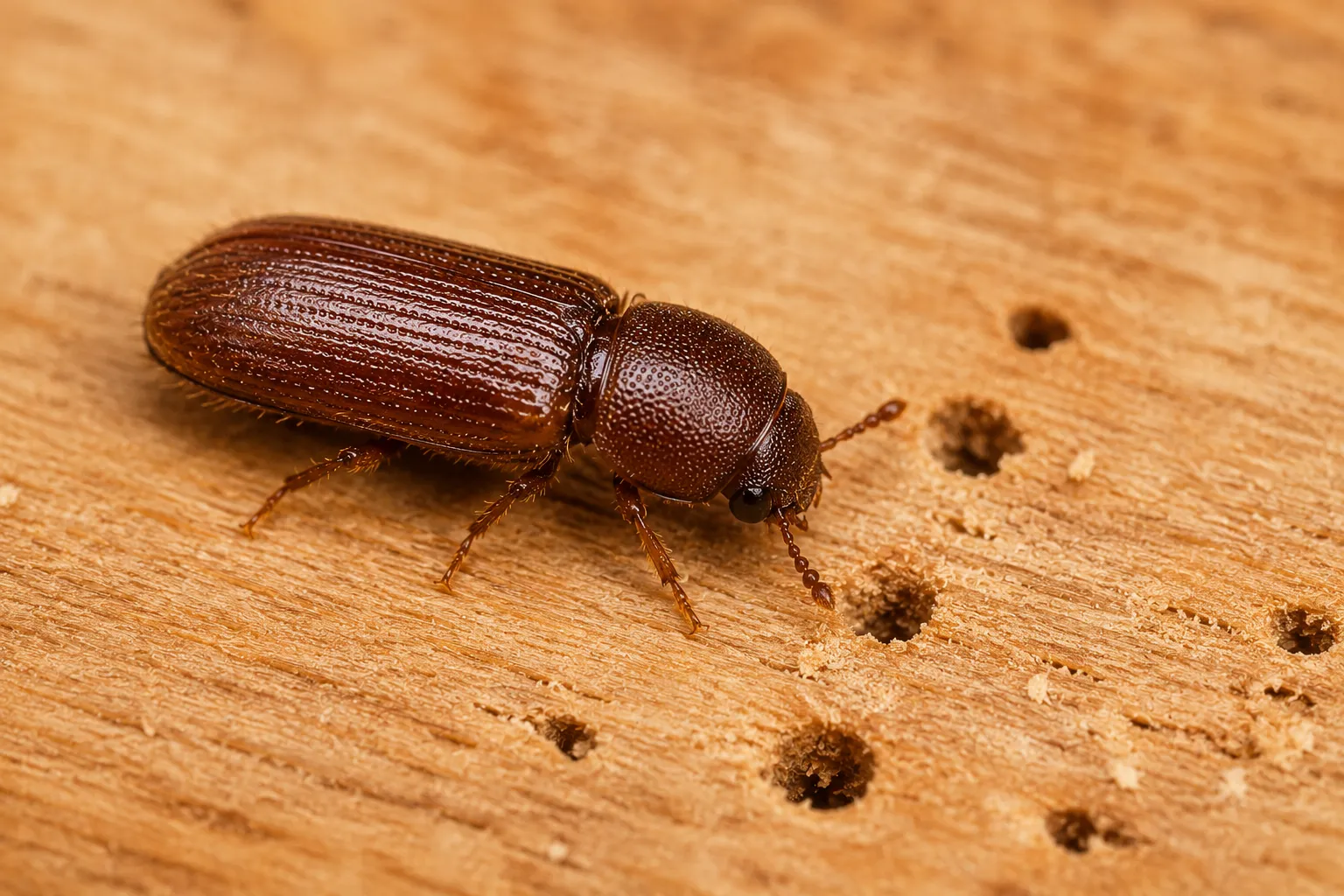
🪲 Common Furniture Beetle
The most widespread wood borer, attacking softwoods like pine. Leaves clean, round 1–2mm exit holes and is often found in furniture and flooring.
📦 Softwood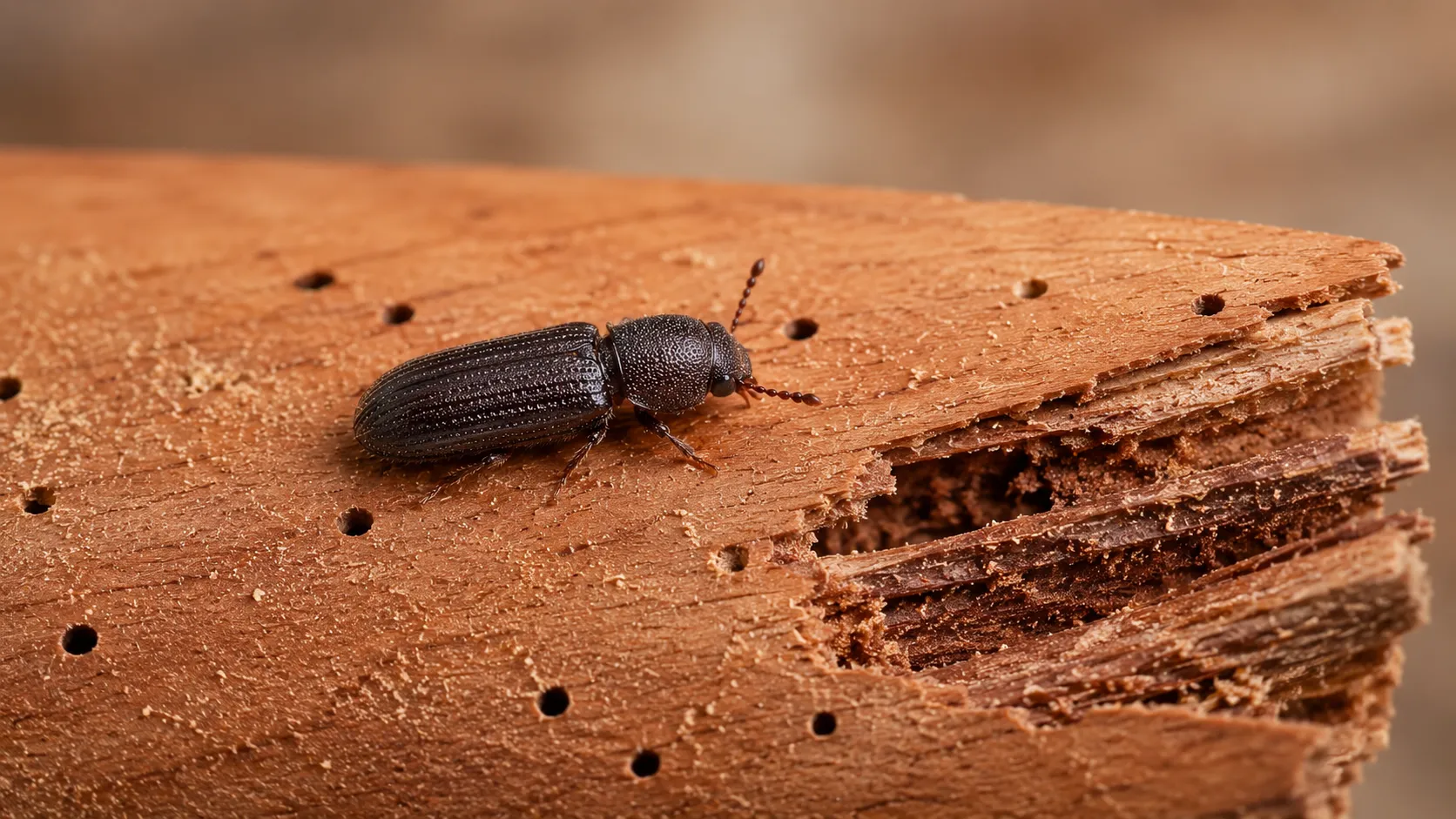
🪲 Powderpost Beetle
Targets hardwoods such as mahogany and oak, gradually reducing dense timber to a fine, powder-like consistency from the inside out.
🪵 Hardwood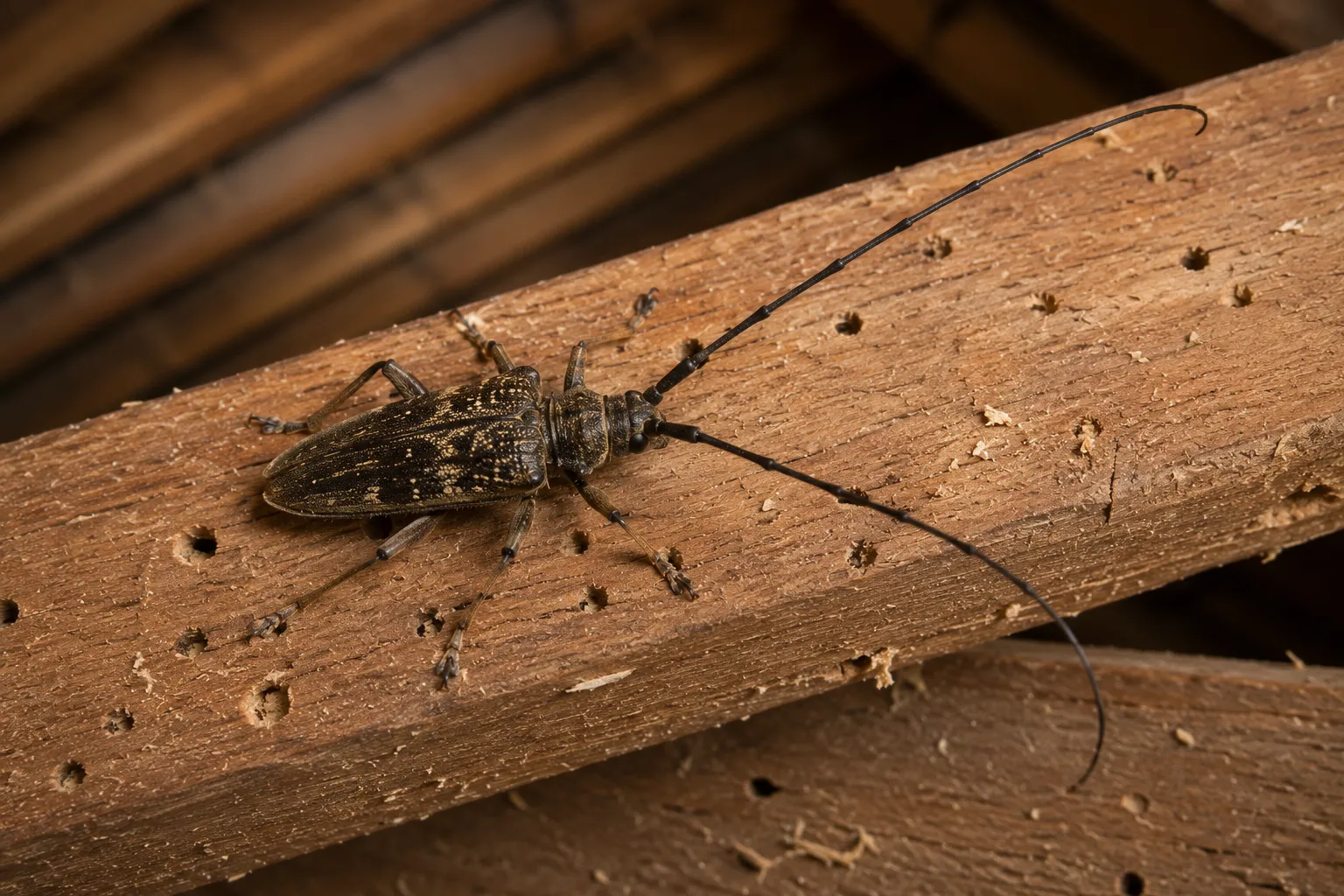
🪲 House Longhorn Beetle
Attacks structural roof timbers specifically, and can cause serious weakening of roof spaces if left untreated for extended periods.
🏠 Structural Risk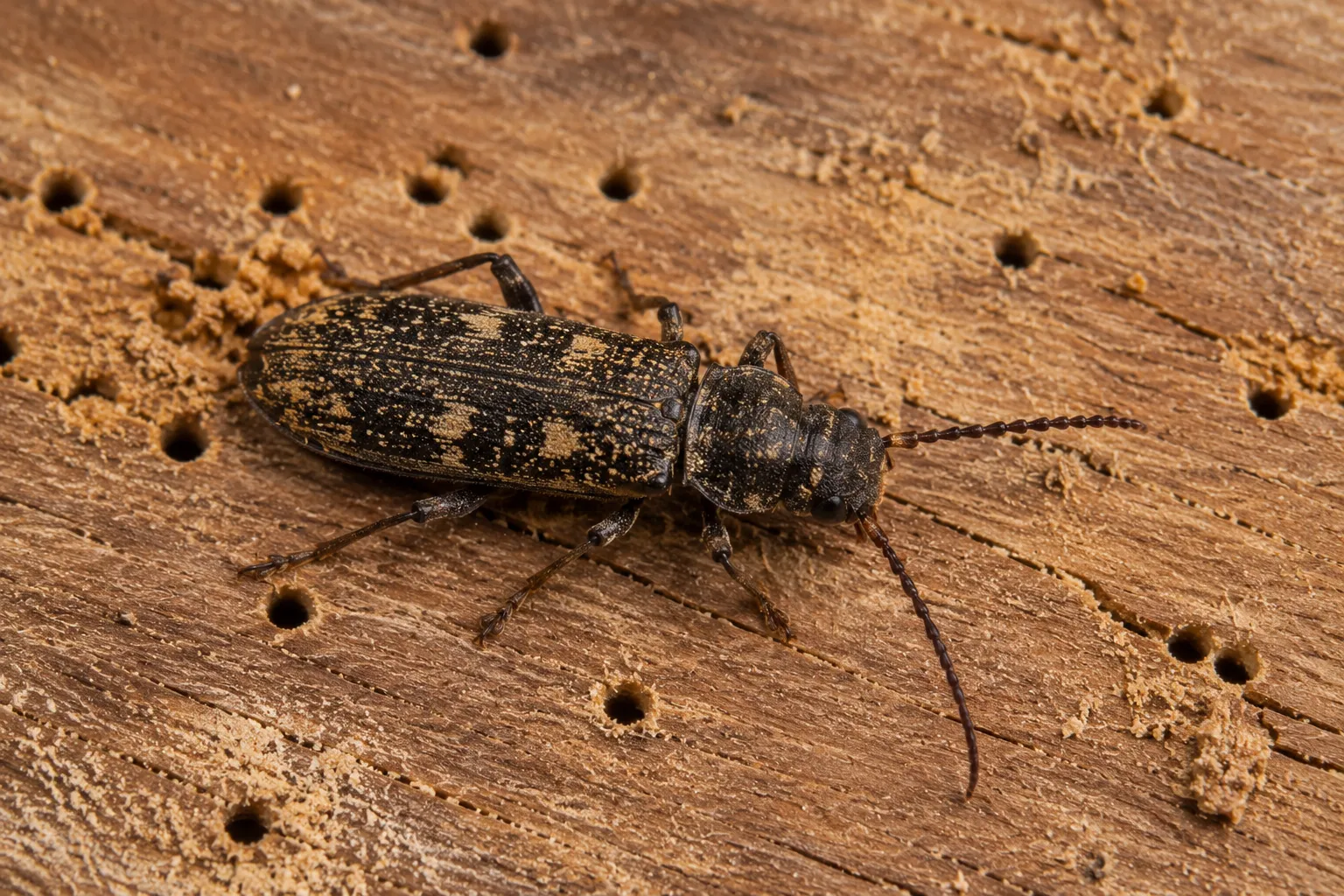
🪲 Death Watch Beetle
Prefers older, damp hardwood and is most often found in older buildings, particularly where past moisture damage has softened the timber.
💧 Damp TimberSigns of a Wood Borer Infestation
Because the damage happens out of sight, these are the surface clues that give an infestation away.
Watch for these warning signs on furniture, doors, flooring, and roof timbers:
- Small round or oval exit holes (1–2mm wide) with clean, sharp edges
- Fine powdery dust (frass) collecting beneath or around wooden items
- Weak, spongy, or crumbling wood, especially at corners and edges
- Tunnels or "galleries" visible if the wood is cut open
- Dead beetles or discarded wings near windowsills or skirting boards
- A faint tapping or clicking sound coming from within the timber (more common with death watch beetles)
- Floorboards that feel soft or give way underfoot in severe cases
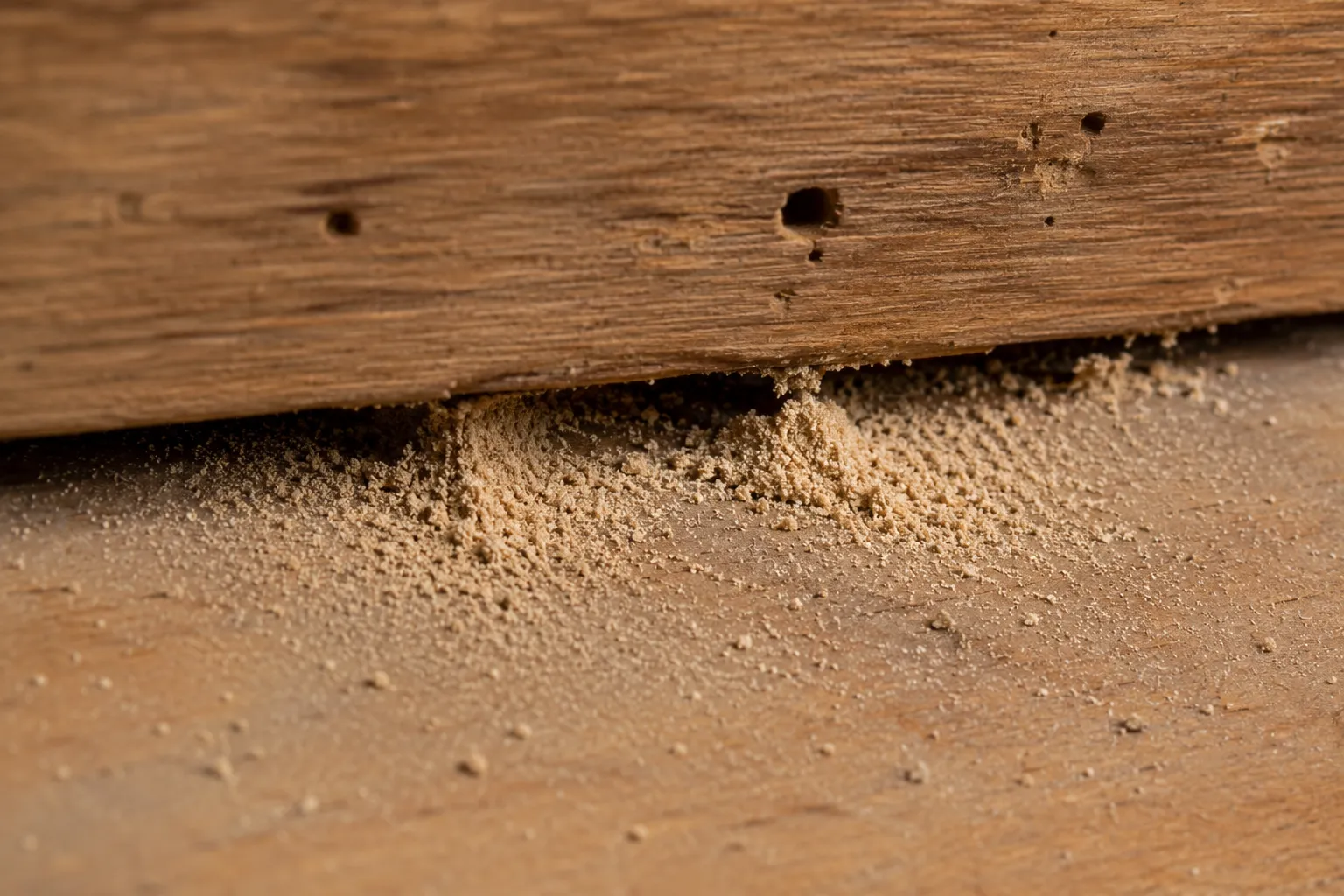
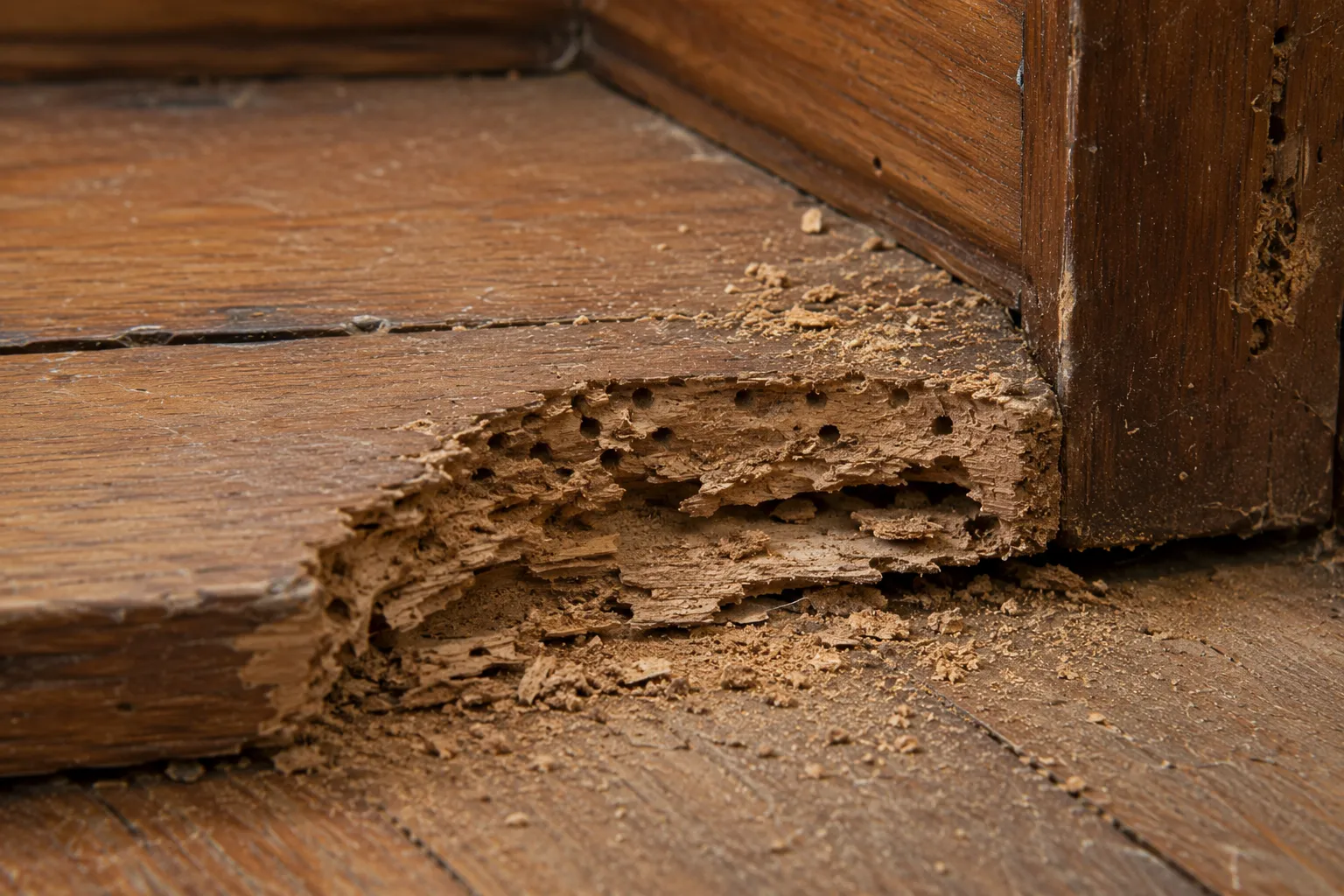
If the frass is white and powdery, larvae are likely still active inside the wood. If it's yellowish and clumped, the larvae have probably matured and left — but the wood is already weakened and should still be assessed.
Wood Borer Treatment: What Actually Works
Treatment depends on the severity, species, and whether it's furniture or structural timber — here's what's actually used.
Once an infestation is confirmed, the right treatment depends on the wood borer species involved, how far the infestation has spread, and whether the affected timber is furniture, flooring, or a structural element.
- 1
Insecticidal / Borate Wood Treatments
Applied directly to the timber surface to kill larvae and prevent re-infestation. Effective for moderate infestations in accessible wood.
- 2
Injection Treatment
Insecticide is injected directly into exit holes and galleries to reach larvae deep inside the timber, where surface treatments can't penetrate.
- 3
Fumigation
Used for severe or widespread infestations, particularly in structural timber, roof spaces, or valuable antique furniture. The fumes penetrate every crack and gallery.
- 4
Heat Treatment
A chemical-free option that raises the wood's core temperature to a level lethal to wood borers at every life stage — egg, larva, and adult.
- 5
Freezing (Small Items)
Small, movable infested items can sometimes be wrapped and frozen for several weeks to kill off larvae and eggs.
- 6
Replacement
If structural timber like roof beams or load-bearing sections is compromised, replacement combined with treatment of surrounding wood is usually necessary.
Our Wood Worm Control Service covers the full process — inspection, species identification, targeted treatment, and follow-up — using Dubai Municipality-approved products that are safe for your family and pets.
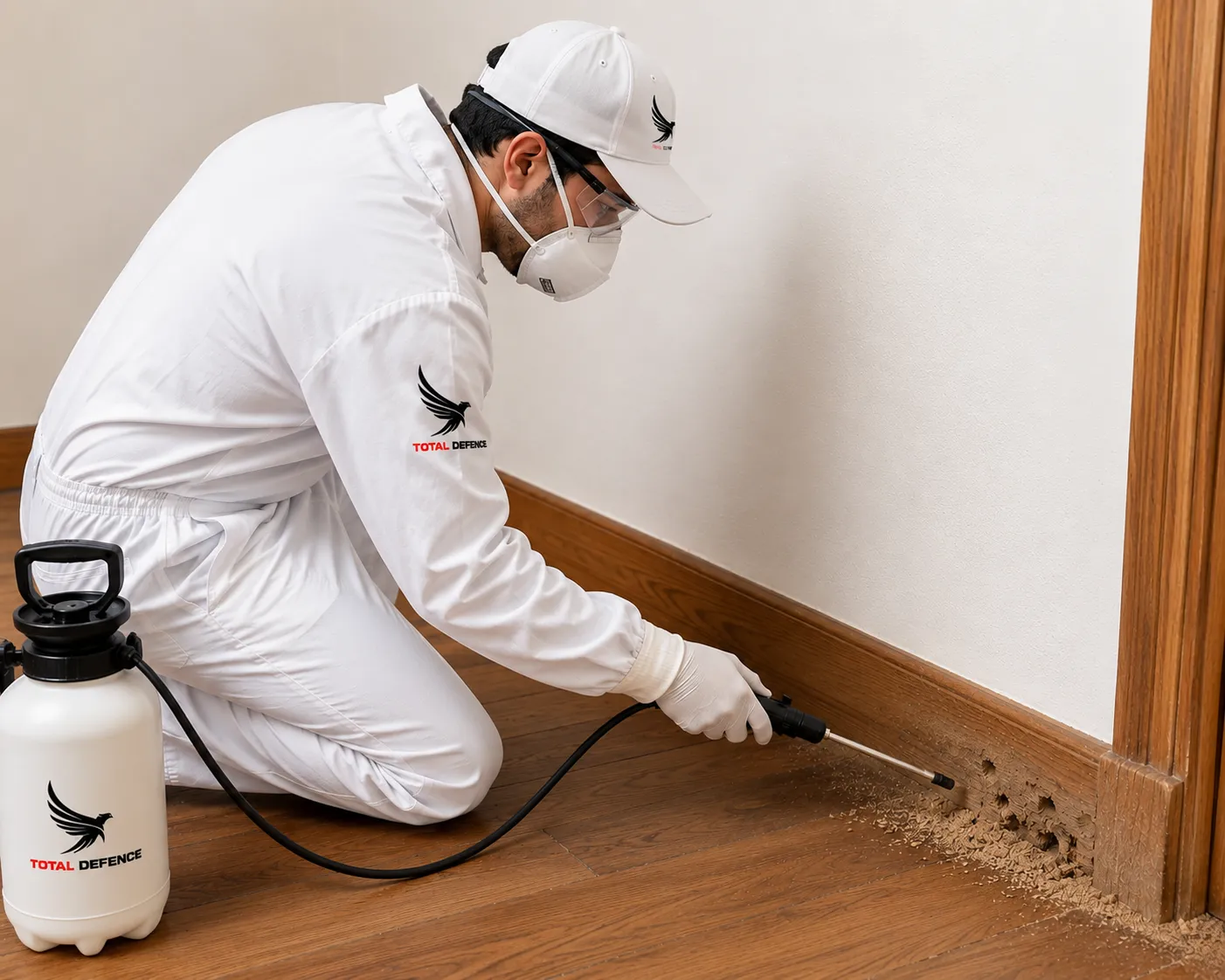
How to Treat Wood Borer: Step-by-Step
If you suspect an infestation, here's the process a professional team follows — and what you should expect at each stage.
- 1
Inspection
A technician identifies the wood borer species, checks how active the infestation is, and assesses the extent of damage across furniture, flooring, roof timbers, and doors.
- 2
Isolate Infested Items
Movable infested furniture is separated from other wooden items to stop the infestation from spreading further.
- 3
Select the Treatment Method
Based on the inspection, the technician chooses insecticide injection, surface treatment, fumigation, or heat treatment.
- 4
Apply Treatment
The chosen method is applied to all affected and at-risk timber, including hidden joints and subfloor areas that are easy to overlook.
- 5
Moisture & Ventilation Control
Since wood borers thrive in damp, poorly ventilated conditions, addressing humidity is a key part of preventing recurrence.
- 6
Follow-Up Inspection
A second visit confirms the treatment worked and checks for any remaining activity before the job is closed out.
How to Get Rid of Wood Borer
Dealing with an active infestation right now? Here's what to do — and what to avoid.
- Don't ignore small holes: even a few exit holes can mean an active colony working through your furniture or flooring
- Isolate affected items: move infested furniture away from other wooden pieces to prevent the infestation spreading
- Avoid DIY chemical overuse: incorrect insecticide use can be harmful to your household and often fails to reach larvae deep inside the wood
- Fix the root cause: dampness, poor ventilation, and leaking pipes near timber structures create ideal breeding conditions — fixing these matters as much as the treatment itself
- Call a licensed pest control provider: for anything beyond a single small item, professional-grade treatment is the only way to guarantee elimination at every life stage — egg, larva, and adult
Total Defence offers a free inspection and consultation for wood borer and termite problems across Dubai, Sharjah, and Ajman, backed by a 3-month service warranty — if pests return within the warranty period, re-treatment is provided at no extra cost.
Wood Borer vs Termite: What's the Difference?
Both damage timber, but they're very different pests — and that difference changes the treatment plan entirely.
Wood borers and termites are often confused because both damage timber, but they're different pests with different treatment approaches.
| Feature | Wood Borer | Termite |
|---|---|---|
| Type of Insect | Beetle | Closely related to cockroaches (social insect) |
| Appearance | Brown/black, hard-shelled, oval body | Pale, soft-bodied, ant-like ("white ants") |
| Where It Nests | Inside the infested timber itself | Usually in soil or a separate nest, away from the wood |
| Feeding Pattern | Larvae tunnel and feed for months/years, then emerge as adult beetles | Colony feeds continuously and can attack multiple structures at once |
| Visible Signs | ✓ Small round exit holes, powdery frass | ✗ Mud tubes, hollow-sounding wood, no exit holes |
| Damage Speed | Gradual, over years | Can be rapid, especially with large colonies |
Wood borers are lone beetles that live and breed inside the wood they damage. Termites are colony insects that travel to and from an external nest. This is also why treatment differs — wood borer treatment targets the timber directly, while termite treatment often requires soil treatment or baiting systems to eliminate the whole colony.
Disadvantages of Building a House From Timber
Timber homes are popular for good reason — but here are the trade-offs worth knowing, especially in humid climates.
- Vulnerability to wood borers and termites: timber is a direct food source for wood-boring insects, requiring ongoing inspection and treatment
- Moisture and humidity damage: wood can warp, rot, or swell in humid conditions without proper sealing and ventilation
- Fire risk: timber structures are generally more flammable than concrete or steel-framed buildings
- Higher maintenance: regular treatments, sealants, and coatings are needed to protect against pests, moisture, and UV damage
- Shorter structural lifespan (if untreated): without consistent care, timber structures can deteriorate faster than masonry buildings
- Sound and thermal transfer: timber can transmit more noise and temperature fluctuation compared to concrete construction, depending on design
None of this means timber is a bad choice — many of these risks are fully manageable with proper timber treatment, regular pest inspections, and good ventilation. It simply means timber homes need a proactive pest management plan, which is where a professional wood borer treatment partner becomes essential.
DIY Wood Borer Treatment: What You Can Do at Home
For small, early-stage infestations, there's a fair bit you can do yourself before calling in a professional.
- 1
Identify the Item(s) Affected
Check for fresh, clean-edged holes and white powdery frass, which indicate active borers. Old, yellowed frass usually means the infestation has already left.
- 2
Isolate the Item
Move infested furniture away from other wooden pieces and out of contact with walls or other timber to stop the spread.
- 3
Clean Out Loose Frass and Debris
Use a vacuum or soft brush to remove dust from holes and cracks before treating.
- 4
Apply a Borate-Based or Insecticidal Wood Treatment
Available at most hardware stores; brush or spray directly onto the surface and into exit holes to kill larvae as they emerge.
- 5
Inject Treatment Into Larger Holes
For visible tunnels, a small syringe or injector nozzle (sold with most borer treatment kits) helps push solution deeper into the galleries.
- 6
Use Natural Deterrents as Backup
Eucalyptus or neem oil brushed onto the surface can help deter new activity, though it won't kill larvae already inside the wood.
- 7
Control Humidity
Keep the item in a dry, well-ventilated space — damp wood is far more attractive to borers and slows down treatment effectiveness.
- 8
Re-Check After a Few Weeks
Look for fresh holes or new frass. If activity continues, the infestation is deeper than surface treatment can reach.
If you're dealing with structural timber (roof beams, door frames, flooring), a widespread infestation, or the frass keeps reappearing after treatment, DIY methods won't reach every larva hiding inside the wood. At that point, professional-grade injection, fumigation, or heat treatment is the only way to fully eliminate the infestation rather than just suppress it temporarily.
Preventing Wood Borer Infestations
Prevention is cheaper than treatment — a few habits keep timber unattractive to wood borers long-term.
- Keep indoor humidity low and ensure good ventilation, especially in roof spaces, basements, and subfloor areas
- Treat exposed and structural timber with a protective sealant or borate solution
- Repair leaking pipes or roofs promptly — damp wood is far more attractive to borers
- Inspect secondhand or antique furniture before bringing it into your home
- Schedule periodic professional inspections, particularly for older properties or homes with exposed structural timber
Why Choose Total Defence for Wood Borer Treatment
A licensed, local team that treats the timber — and the reason it got infested in the first place.
Total Defence is a trusted, licensed pest control company serving Dubai, Sharjah, and Ajman. When you book a wood borer inspection, here's what you get:
- Free inspection and consultation for wood borer, termite, and general pest issues
- Dubai Municipality-approved, safe treatments suitable for homes with children and pets
- Certified, experienced technicians who correctly identify the pest before treating
- 3-month warranty on pest control services, with free re-treatment if pests return
- Residential and commercial coverage, including villas, apartments, offices, and warehouses
Every Total Defence wood borer treatment comes with a 3-month warranty. If activity returns within that period, we return and re-treat at zero cost.
Wood Borer Control & Related Pest Services
A property vulnerable to wood borers often shares conditions that invite other pests. Here's what we handle alongside wood borer control.
Areas We Serve Across Dubai & Sharjah
From Dubai Marina to Sharjah's Al Majaz — we're already near you. Same-day assessment available across both emirates.
Total Defence provides professional wood borer inspection and treatment across all Dubai and Sharjah districts. Same-day assessment available in most areas — from Dubai Marina, Downtown, and Arabian Ranches to Sharjah's Al Nahda, Al Majaz, and Al Qasimia.
We cover all of Dubai and Sharjah — including Dubai Marina, JBR, Downtown, Business Bay, DIFC, Jumeirah, Al Barsha, Mirdif, Arabian Ranches, The Springs, Dubailand, Al Quoz, JAFZA, Dubai South, Silicon Oasis, Discovery Gardens, International City, Deira & Bur Dubai, plus Sharjah's Al Nahda, Al Majaz, Al Qasimia, Muweilah, and Al Taawun.
Frequently Asked Questions
Can wood borers damage wooden furniture badly?
Yes, if left untreated, wood borers can slowly work their way through furniture, doors, windows, wardrobes, and other wooden interiors. The damage tends to creep up on you, which is why catching it early with a proper inspection makes such a big difference in limiting how far it spreads.
Is wood borer treatment safe for my family and pets?
Yes, wood borer treatment can be safe when handled by trained professionals. Our team follows proper application methods and gives safety instructions before and after service.
Do I need to replace the affected wooden items?
Replacement isn't always necessary. It depends on how much the wood has been damaged. Our technician will carefully inspect the affected timber and recommend the most suitable solution—whether that's treatment to preserve the wood or replacement if the damage is beyond repair
How long does wood borer treatment take?
Every property is different, so treatment time can vary. It depends on how extensive the infestation is, how many wooden items need treatment, and the method used. In most homes, the treatment is completed within a few hours, but larger or more heavily infested properties may take longer..
Do you provide wood borer treatment for offices and commercial spaces?
Yes, we provide wood borer treatment for homes, offices, hotels, showrooms, restaurants and commercial spaces with wooden furniture or interiors.
How can I prevent wood borers from returning?
Keep wooden items dry, reduce moisture, inspect old furniture before use and schedule periodic pest inspection for valuable wooden interiors.
Does the treatment leave stains on wood?
Every wooden surface is different. Our technician will inspect the wood, assess its condition and finish, and recommend the safest treatment method to minimise any impact while effectively eliminating the infestation.
Do you provide warranty for wood borer treatment?
Warranty depends on the treatment package, wood condition and infestation level. Our team will explain the applicable terms before service.
What are the disadvantages of building a house from timber?
Timber homes are more vulnerable to wood borers and termites, moisture damage, and fire risk, and they typically require more ongoing maintenance — including sealants, coatings, and regular pest inspections — compared to concrete or masonry construction.
What is the difference between borers and termites?
Wood borers are beetles whose larvae live and feed inside the wood, eventually emerging as adult beetles through small exit holes. Termites are colony insects (related to cockroaches) that usually nest in soil or a separate structure and travel to the wood to feed, often leaving mud tubes rather than exit holes.
How do I know if I have wood borers or termites?
Look at the type of damage: exit holes and powdery dust (frass) point to wood borers, while mud tubes, hollow-sounding timber, and no visible holes point to termites. A professional inspection is the most reliable way to confirm which pest you're dealing with.
Seeing Signs of Wood Borer at Home? Get It Handled Before It Spreads.
Dubai Municipality approved · Licensed & insured technicians · 3-month warranty · Free inspection & quote